What Happens If You See Robert The Doll?
The honest answer to the most-asked question about Key West's famous haunted doll: what the museum claims, what is verified, and what a real visit to Fort East Martello involves.
What Happens If You See Robert The Doll?
The honest answer is that nothing independently verified happens at all. Robert the Doll is a stuffed, 40-inch doll in a glass case at Fort East Martello, and no paranormal outcome of seeing him has ever been documented. What does happen is that the museum frames the visit around its own claims, apology letters keep arriving, and many visitors leave with a story of their own.
That gap between the legend and the record is the whole reason the question gets asked so often. The legend keeps drawing people in, but the documented record tells a stranger story contact with the facts. People want to know whether something will happen to them, whether they should be afraid, whether they need permission for a photo, and whether the misfortune stories are real. The doll's own official site presents a biography that is genuinely documented, the Steiff company origin around 1904, the boy Robert Eugene "Gene" Otto, the 1994 donation to the Key West Art and Historical Society, and then layers a second story on top of it: footsteps, giggling in the attic, expressions that change, bad luck for visitors who photograph him without permission.
Local lore holds that Robert is one of the most famous haunted objects in America, and enthusiast sites regularly place him in "most haunted doll" conversations alongside better-known Hollywood creations. The museum itself leans into that reputation rather than disputing it. But every claim about what actually befalls a person who sees him traces back to the museum's own narrative framing, visitor letters, and family lore recorded on the official story page, not to any independent investigation that confirmed a phenomenon.
This article separates the two layers cleanly. It covers what the museum claims happens, what the verified history actually says, what a real visit involves in practical terms, and what your options are if you want more than a daytime look through the glass. Along the way it links the pieces to this site's own coverage, including the Robert the Doll visitor guide for anyone planning the trip itself.
Where Robert Lives Now And What The Museum Claims Happens
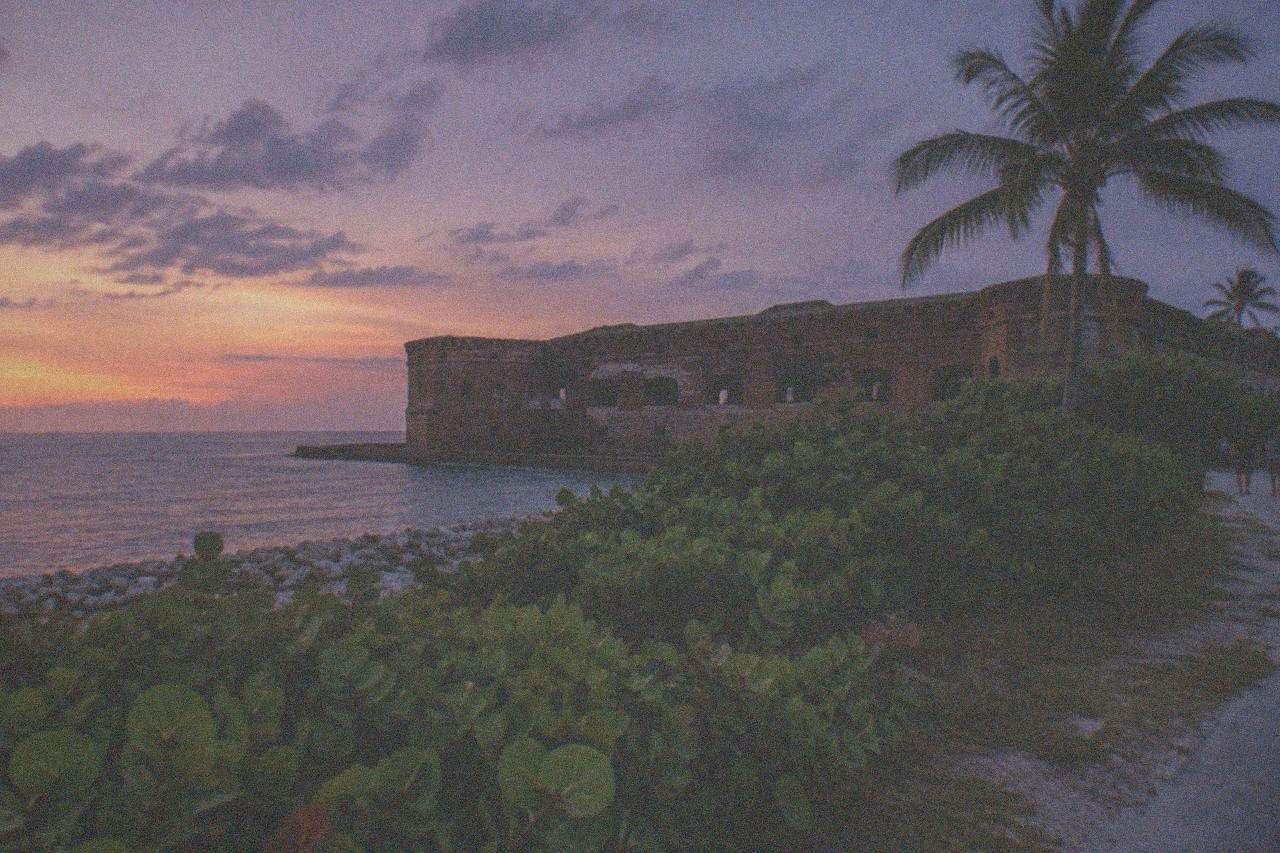
Robert the Doll is on permanent display at the Fort East Martello Museum at 3501 South Roosevelt Boulevard in Key West, where he has been since Myrtle Reuter donated him in 1994. The museum's own framing says visitors who photograph him without permission experience bad luck, and that apology letters arrive on a daily basis. Neither claim is independently verified, and the museum does not present them as settled fact either.
The documented chain of custody is short and clean. The doll was made by the German Steiff company around 1904 and given to a Key West boy, Gene Otto, who lived in the 1890s Artist House on Eaton Street. After Gene's death in 1974 the doll stayed with a later owner of that house, Myrtle Reuter, who according to the story page said Robert had "moved on his own" and was haunted before donating him to the Key West Art and Historical Society in 1994. Since then he has stood in his case at the fort, dressed in a sailor suit that once belonged to Otto, with a lion companion figure beside him.
The claims layer is the part that fills the glass case with letters. Visitors who report misfortunes after a visit, the museum's own narrative goes, write back to apologize for photographing him without asking first. Recent reporting has described curators receiving hundreds of letters and emails annually from people apologizing for photos or mockery, and a 2025 article quoting museum curator Cori Convertito noted an upgraded protective case and ongoing visitor reports of misfortunes attributed to the doll: car crashes, injuries, the occasional divorce. Framed plainly, these are stories people tell about the doll, collected and displayed by the institution that benefits from the legend, which is a fair thing for a visitor to know.
What genuinely happens to most people who see him is mundane and pleasant. You walk through a Civil War fort, you look at a strange old doll in a case, you may write on a chalkboard or read a few letters, and you go home with photographs nobody has cursed. A widely reported visitor reaction, including a detailed account from a 2026 forum post, is the opposite of dread: several visitors describe feeling calm or even charmed near the case, with the unease belonging to other, darker parts of the fort. That account is anecdote, but it is at least as representative as the misfortune letters.
For anyone who wants the full experience of standing in the room with him after hours, the site's featured pick is the Fort East Martello Ghost Hunt, a two-hour after-dark experience from $99 with a guided fort tour, a seated encounter with the doll, and an independent paranormal investigation using ghost-hunting equipment. It is rated 4.7 from 173 reviews, capped at 25 travelers per night, and it meets at the fort itself.
Is Any Of It Verified? What The Record Actually Shows
The verified record covers the doll's construction, ownership and donation, all of it sourced from the museum's own published history. No haunting, curse, expression change, voice, or misfortune has ever been independently verified, and the museum's site itself labels the childhood stories as family lore rather than documented events. The misfortune letters are real objects, but they are evidence of a legend's reach, not of a phenomenon.
It helps to sort the record into three piles. The first pile is documented history: the Steiff origin, the Otto family, the Artist House, the 1994 donation, the permanent display. The second pile is the family lore the official site presents as legend: Gene as a child blaming misbehavior on the doll, parents hearing a second voice answer him, the doll's expression changing. The third pile is visitor mythology: the apology letters, the bad-luck framing, the attic footsteps and giggling neighborhood children reported. The museum publishes all three, but only the first is history in the strict sense.
The third pile deserves its own honest look, because it is the pile the search question is really about. A letter that says "I photographed Robert and then crashed my car" is a real letter with a real author. What it is not is evidence of causation, and no serious investigation has ever claimed otherwise. The pattern is a classic one in folklore studies: a famous object, a widely circulated rule, and a steady stream of people who experience ordinary bad luck and connect it to the rule after the fact. The museum keeps the letters because they are genuinely fascinating artifacts of modern folklore, not because anyone at the institution claims each one is a confirmed paranormal event.
The museum's own story page records the same split. The attic footsteps, the giggling, the expression change and the bad-luck-after-photography framing are flagged throughout as the museum's own narrative on its official site, and this site reports them only with that attribution. The documented biography, the Steiff origin through the 1994 donation, is treated as real sourced history. That distinction runs through every page on Key West Ghost Tours, and it matters here more than anywhere, because this is the question where the legend and the facts are most easily blurred.
One more piece of honest context: fame has produced its own noise. A low-budget Scottish horror film titled "Robert Returns" entered production in 2026 and is not affiliated with the Key West museum at all, and casual articles regularly confuse the doll with movie creations like Chucky. The real Robert is a century-old German toy in a museum case, which is strange enough on its own.
What A Real Visit To Fort East Martello Involves
A daytime visit means a self-guided walk through a Civil War fort museum, open daily from 10:00 a.m. to 5:00 p.m. with last admission at 4:30 p.m. Adult admission is $17 at the door or $15.50 online, and Robert is one of three permanent exhibits alongside the fort's folk art and its own ghost-history display. Free on-site parking is available.
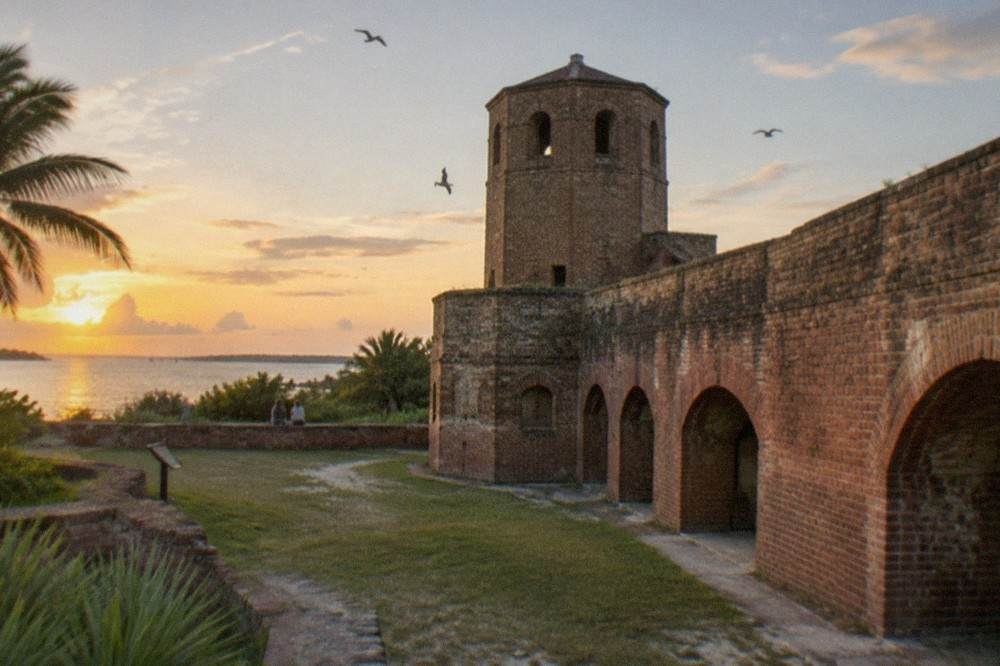
The museum's own page lays out the essentials, and they are stable: the fort sits at 3501 South Roosevelt Boulevard next to the airport, built as a Civil War-era fortification on a Union-controlled island whose residents largely supported the Confederacy. The permanent exhibits are "Robert the Doll," the Stanley Papio folk-art collection, and "Ghosts of East Martello." Visitors who arrive expecting a haunted house attraction are usually surprised by how much straightforward military and local history surrounds the doll case.
| Visit detail | What to expect |
|---|---|
| Hours | 10:00 a.m. to 5:00 p.m. daily, last admission 4:30 p.m. |
| Adult admission | $17 at the door, $15.50 online |
| Reduced admission | $13 at the door for seniors, locals, college ID and retired military, $11.50 online |
| Youth and children | Age 7 to 18 is $9 ($7.50 online), under 7 free |
| Getting there | Free on-site parking, next to Key West International Airport, roughly 10 minutes by car from Old Town |
| The doll himself | A permanent exhibit in a glass case with his lion companion and visitor letters |
The setting matters to the question more than it first appears. Seeing Robert in person is a quiet museum moment, not a jump scare, and the fort around him is genuinely atmospheric: brick casemates, a climbable tower with ocean views, scrap-metal sculptures, and the parade grounds. Recent local news describes completed drainage and parking improvements around the site plus ongoing masonry restoration, so the grounds are actively maintained even while weekday work continues.
If the daytime visit raises more questions than it answers, this site's guide to the most haunted places in Key West places the fort in the wider island context, and the ghost tour worth-it guide covers whether an after-dark ticket makes sense for your budget.
The Photo Rules And What Visitors Are Actually Asked To Do
The museum's etiquette asks visitors to greet Robert politely and to ask his permission before taking a photograph. Nothing bad is verified to happen if you skip either step, but the request is the museum's own framing and it is the origin of the apology-letter tradition. Respecting a stated house rule costs nothing, and it is the honest way to read the legend.
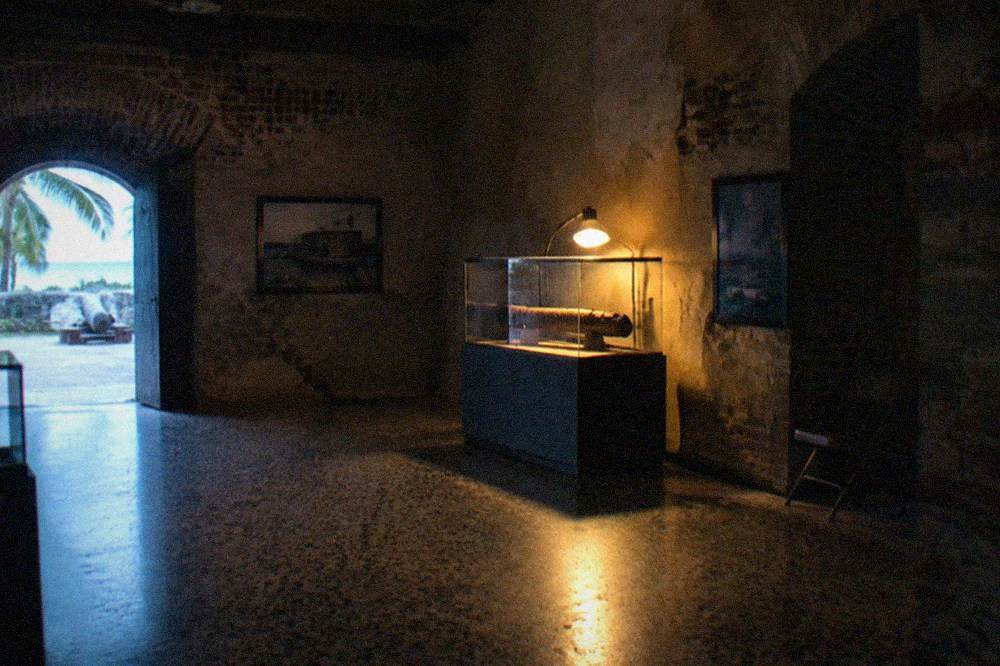
The mechanics of the rule are simple. The story goes that a visitor who photographs Robert without asking first invites bad luck, and that the remedy is a written apology. The letters displayed and received by the museum follow that pattern: people describing a misfortune, connecting it to a photo, and apologizing in writing, sometimes years later. The museum has reported receiving hundreds of such letters and emails annually. As folklore, the loop is beautifully self-sustaining: the rule tells you what to watch for, ordinary life supplies the bad luck, and the apology confirms the rule.
Visitors who want to follow etiquette without adopting the belief can do exactly that. Say hello to the doll, ask before you photograph, skip the mockery, and move on. Visitors who do not believe a word of it can still reasonably honor a house rule in a museum that has been a good steward of a strange piece of local history for three decades. What honest coverage will not do is tell you a photo will curse you, because nothing supports that, and it will not tell you the museum guarantees nothing happens either, because the museum's whole presentation is built on the mystery.
This question about photographs is closely tied to the sibling article on this site, why you can't take pictures of Robert the Doll, which digs into the rule's origin and what the letters actually say. For the visitor, the practical takeaway fits in one line: greet him, ask, and take your picture.
How To See Robert After Dark
The only after-dark way to see the doll on this site's roster is the Fort East Martello Ghost Hunt, a two-hour experience from $99 that includes a guided fort tour, a seated encounter with Robert, and an independent paranormal investigation with equipment. Two other Key West ghost hunts offer the same investigation format at different sites and price points.
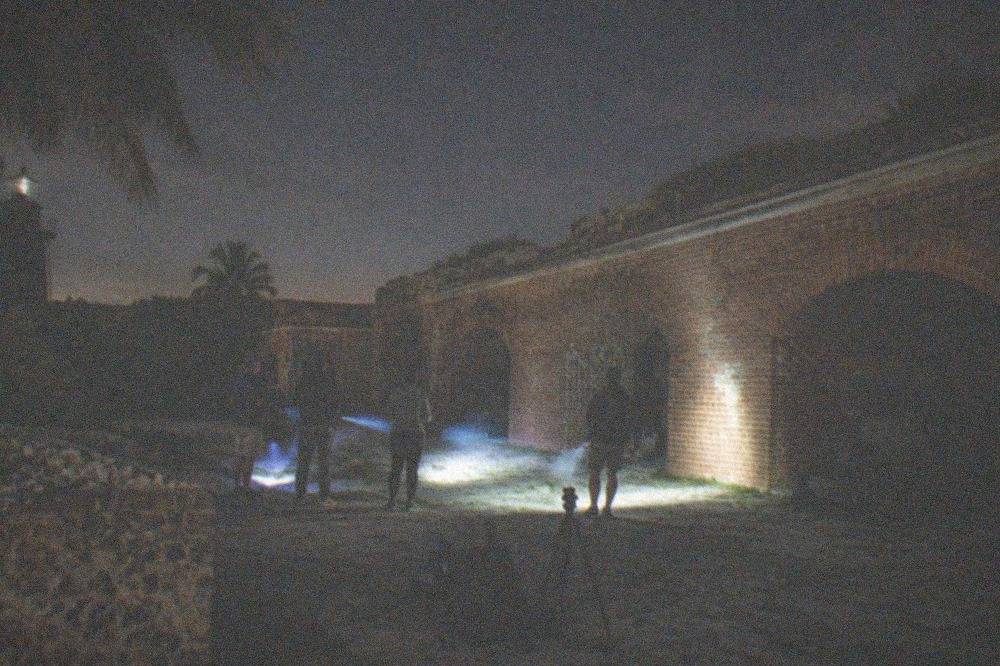
The after-dark format is worth understanding before booking, because it differs sharply from the walking ghost tours of Old Town. You are inside the fort itself, after hours, with a small group and a guide from Sloan's Key West Ghost Tours, the operator founded by David L. Sloan, the author and investigator who launched Key West's first organized ghost tour in 1996. The evening splits into three parts: a guided tour of the fort and its history, a seated encounter with Robert the Doll in front of his case, and then time to investigate on your own with ghost-hunting equipment. The VIP version runs two hours, is capped at 25 travelers, and is rated 4.7 from 173 reviews.
| After-dark option | Format | Price from | Duration | Reviews |
|---|---|---|---|---|
| Fort East Martello Ghost Hunt | Fort tour, seated Robert encounter, equipment investigation | $99 | 2 hours | 4.7 from 173 |
| Haunted Firehouse Investigation | Audio tour plus independent investigation in a 1907 firehouse | $95 | About 2 hours | 5.0 from 11 |
| Equipment Ghost Hunt (16+) | Dowsing rods, EMF meters, spirit board at haunted Old Town sites | $45 | 1.5 hours | 4.6 from 112 |
The firehouse option deserves a paragraph of its own. The Haunted Firehouse Investigation runs inside the historic 1907 firehouse that enthusiast and tour-operator sites describe as America's most haunted firehouse, capped at just 13 people per night, from $95, with a 5.0 rating from 11 reviews. It shares the same operator and the same investigation format as the fort hunt, so it works either as an alternative for a sold-out Robert night or as a second evening for visitors who catch the hunting bug.
The budget contrast is the Equipment Ghost Hunt, from $45 for 90 minutes with dowsing rods, EMF meters and a spirit board at several haunted locations around Old Town, meeting at 301 Whitehead Street. It is ages 16 and up, capped at 16 travelers, and rated 4.6 from 112 reviews. It does not include Robert, but for the traveler whose real question is "what happens if I try ghost hunting," it is the cheapest equipment-based answer on the roster.
The after-dark question is where this article's honest answer gets tested. Nothing verified happens if you see Robert the Doll in daylight, and nothing verified happens after dark either. What the evening hunt adds is atmosphere, equipment, a guide steeped in the story, and a small group of people asking the same question you are, which is its own kind of answer. Visitors who want the legend at full volume book the fort night; visitors who just want the history can save the money and take the daytime ticket.
Common Questions About Seeing Robert The Doll
Common Questions About Seeing Robert The Doll
What Happens If You See Robert The Doll?
Nothing independently verified. Robert is a stuffed doll in a glass case at Fort East Martello, and no paranormal outcome of seeing him has been documented. The museum's own framing claims bad luck follows visitors who photograph him without permission, and apology letters arrive on a daily basis, but those are the institution's own narrative claims and visitor stories, not verified phenomena.
Is the story of Robert the Doll real?
The documented parts are: a Steiff doll from around 1904, owned by Key West artist Gene Otto, donated to the Key West Art and Historical Society in 1994 and displayed at Fort East Martello since. The haunting claims, the voice in the attic, the expression changes and the photo curse, are family lore and museum framing that the official site itself presents as legend rather than verified events.
Can you still visit Robert the Doll?
Yes. He remains on permanent display at the Fort East Martello Museum, open daily from 10:00 a.m. to 5:00 p.m. with last admission at 4:30 p.m. Adult admission is $17 at the door or $15.50 online, and the museum offers free on-site parking. After-dark visits are possible through the Fort East Martello Ghost Hunt, a two-hour guided experience from $99.
What happens if you take a photo of Robert the Doll?
Per the museum's own framing, photographing him without asking permission first invites bad luck, and the remedy is a written apology, which the museum reportedly receives by the hundreds each year. Nothing about this is independently verified, but greeting him and asking before a photo is the stated etiquette, and honoring a museum's house rule costs nothing.
Where is Robert the Doll kept today?
In a glass case at the Fort East Martello Museum, 3501 South Roosevelt Boulevard, Key West, next to the airport, where he has been on permanent display since the 1994 donation. He is shown with a lion companion figure and the visitor letters he receives.