The Carl Tanzler And Elena Hoyos Story: Key West's Real 1930s Case
Key West has one story that needs no embellishment: a real, documented 1930s case involving a hospital technician, a young tuberculosis patient, and a discovery in 1940 that made national headlines. Here is what the record actually holds, where the ghost-tour retellings begin, and how to see the sites yourself.
Short answer
Carl Tanzler, who also went by Count Carl von Cosel, was a Key West resident documented to have removed the body of Elena Hoyos from the Key West Cemetery years after her 1931 death from tuberculosis, keeping it at his home until the discovery in 1940. It is real documented history, not folklore, though many surrounding details are tour storytelling.
Key West trades in ghost stories, but most of them are theater: a costumed guide, a lantern, a well-drilled tale. Then there is the case of Carl Tanzler and Elena Hoyos. This one is documented. A young woman died of tuberculosis in Key West in 1931. Years later, the man who had treated her, who also went by the alias Count Carl von Cosel, was found to have removed her body from the Key West Cemetery and kept it at his home until the discovery in 1940. Newspapers covered it. Court records and local archives hold it. No candle required.
That is exactly why the story has become the island's most retold dark tale, folded into walking tours and haunted-history nights across Old Town. The nearest bookable product to that lore on this site is the Ghost and Mysteries Walk from Key West Ghost and Mysteries Tour, a 90-minute guided walk that passes several of the sites the Tanzler-era Key West would have known, and which we cover in depth further down this page. This guide separates the documented case from the folklore layer built on top of it, then shows you how to visit the real places, from the cemetery on Solares Hill to Fort East Martello on the island's southern edge.
Who Were Carl Tanzler And Elena Hoyos In Key West?
Carl Tanzler was a Key West resident, variously recorded under his own name and the alias Count Carl von Cosel, who became infatuated with Elena Hoyos, a young patient who died of tuberculosis in 1931. He is documented to have taken her body from the Key West Cemetery years later and kept it at his home until 1940. The core of the case is a matter of record, not legend.
Elena Hoyos was a young woman of Key West's Cuban American community, part of the island's majority-Cuban population of the era, a detail local historians emphasize when retelling the case because it frames how the community experienced the aftermath. Carl Tanzler worked in the island's medical world, and the spelling of his self-styled title, "Count Carl von Cosel," appears both ways across surviving sources. He presented himself as European nobility; the record treats that as an alias.
The two met through that medical connection when Elena was ill. Tuberculosis was a devastating and common killer in Key West in the years around her death, a low-lying, crowded port town where the disease spread easily and treatment options were few. Elena Hoyos did not survive it. That much is documented.
What followed is the part that made the case notorious. Tanzler remained fixated on her after her death, and local accounts describe him visiting her gravesite in the Key West Cemetery. The step that turned obsession into a criminal case came years later, when he removed her body from the cemetery and took it home. When the situation was discovered in 1940, the case became a sensation, covered far beyond Florida. Key West has leaned on it ever since, and honestly, no island in America has a better documented one.
What Is The Documented Account Of The Tanzler Case?
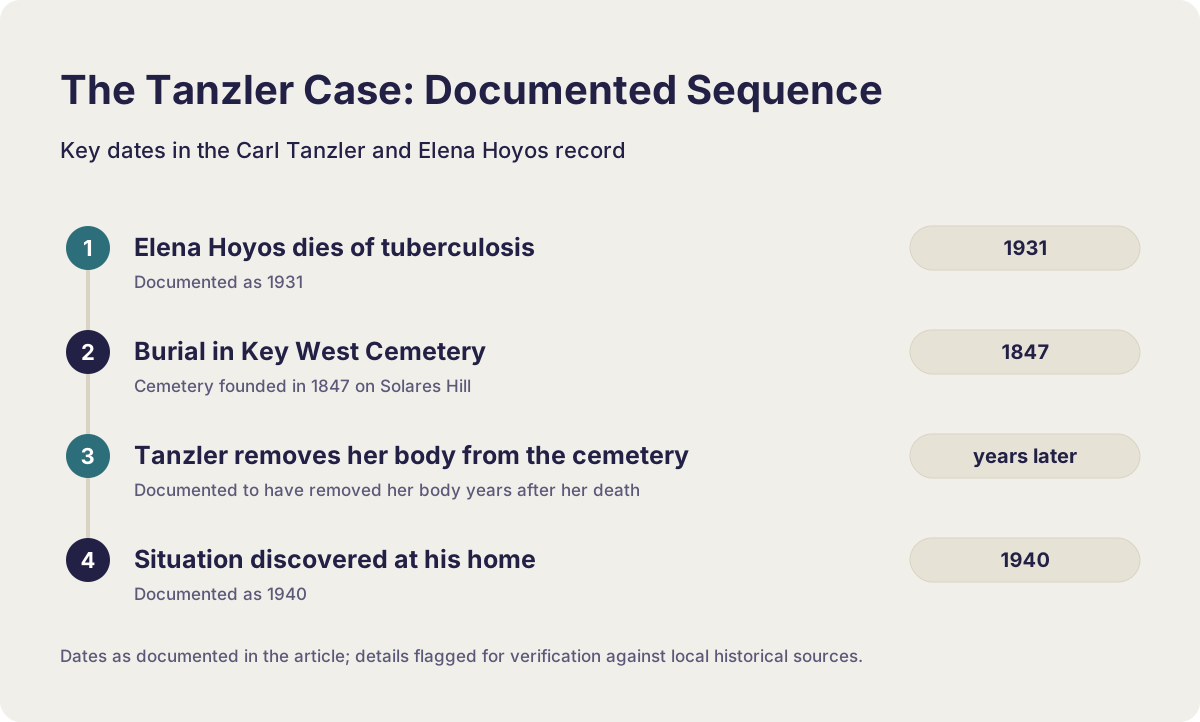
The documented account is short and stark: Elena Hoyos died of tuberculosis in 1931, was buried in the Key West Cemetery, and years afterward Carl Tanzler removed her body from its resting place and kept it at his home, where the situation came to light in 1940. Every element of that sentence traces to the historical record, and no element of it depends on a ghost story.
The strange parts of this story are folklore, and the tour guides say so themselves, and this guide follows it. Exact dates should read "documented as" or "reportedly" when checked against a Key West Art & Historical Society or Monroe County library source, because secondary retellings drift on details. What follows is the case as the record holds it.
Tanzler had come into Elena's orbit while she was a patient. After her death and burial in the Key West Cemetery, he did not let the connection go. Local and tour-operator accounts describe repeated visits to her grave, and the documented core is that he eventually constructed a way to take her body from the cemetery and bring it to his home on the island. There it stayed, concealed from neighbors, until 1940.
The discovery itself is the moment the story left Key West's gossip network and entered the national press. A body had been kept in a private home for a period of years, and once authorities and the community understood what had happened, the case drew sensational coverage. Public reaction in Key West was reportedly more complicated than outsiders expected, with some community sympathy directed at odd angles of the story, and the legal aftermath became a subject of local historical study rather than a simple morality tale.
The reason this matters for a ghost-tour site is honesty. Plenty of Key West hauntings are folklore, enjoyable and unverifiable. The Tanzler case is not a haunting at all. It is a documented crime of obsession with a paper trail, which is precisely why tour operators love it: they can tell it as true.
| Case element | What the record documents | How sources phrase it |
|---|---|---|
| Elena Hoyos's death | Tuberculosis, 1931 | Documented as 1931 |
| Her burial | Key West Cemetery, the city's active burial ground on Solares Hill | Documented |
| Body removal | Tanzler removed her body years after her death | Documented to have removed her body years after her death |
| The discovery | The situation came to light in 1940 | Documented as 1940 |
| Tanzler's name | Appears as both Carl Tanzler and Carl von Cosel | Recorded both ways across sources |
| Haunting claims | None in the documented record | Tour and enthusiast storytelling only |
If you want the story told where it happened, those three formats cover the spread: a classic walking ghost tour, an equipment-based ghost hunt at the fort, and an adults-only dark-history walk.
How Did The 1940 Discovery Unfold?
The discovery in 1940 exposed that Tanzler had been keeping Elena Hoyos's body at his home, and the case immediately became one of the most sensational stories ever to come out of Key West. The documented record confirms the discovery, the removal of the body, and the public and legal aftermath that followed, while later retellings have added layers the record never contained.
Picture Key West in 1940. The town was still recovering from the Depression collapse of its cigar and sponge industries, the Navy was expanding its presence again, and the population was a few tens of thousands of people who mostly knew each other's business. A case like this did not stay quiet for long. Once the situation at Tanzler's home came to light, the story spread with a speed that only a small island community can manage, and the national press picked it up from there.
The specific mechanics of the discovery, the exact legal outcomes, and precise dates are details best checked against a Key West Art & Historical Society or Monroe County library source before being quoted as exact. This guide will not invent them. What the record holds firmly is the core sequence: death in 1931, removal of the body from the cemetery years later, discovery in 1940.
What the case did to Key West's reputation is its own story. The island had centuries of shipwreck, yellow fever and hurricane deaths behind it, and the tourism industry that grew after the ghost tour trade began in 1996 built a haunted-city identity on that pile of real grief. The Tanzler case gave that identity its centerpiece: a true story so strange it outdid any invented ghost. David L. Sloan, who launched the island's first organized ghost tour in that year and went on to write books on Key West's hauntings, built an entire storytelling tradition in which the documented cases anchor the folklore. Nearly 30 years later, that tradition spans more than a dozen operators offering ghost tours and related experiences across the island.
The honesty test for any tour version is simple. Does the guide say "this is a documented case" and then stick to the documented core, or does the documented core quietly grow new limbs, secret weddings, love letters, courtroom speeches? The first is history told well. The second is folklore wearing history's clothes. Both can be a good evening out, but you should know which one you bought.
Where Does Elena Hoyos Connect To Key West Cemetery Today?
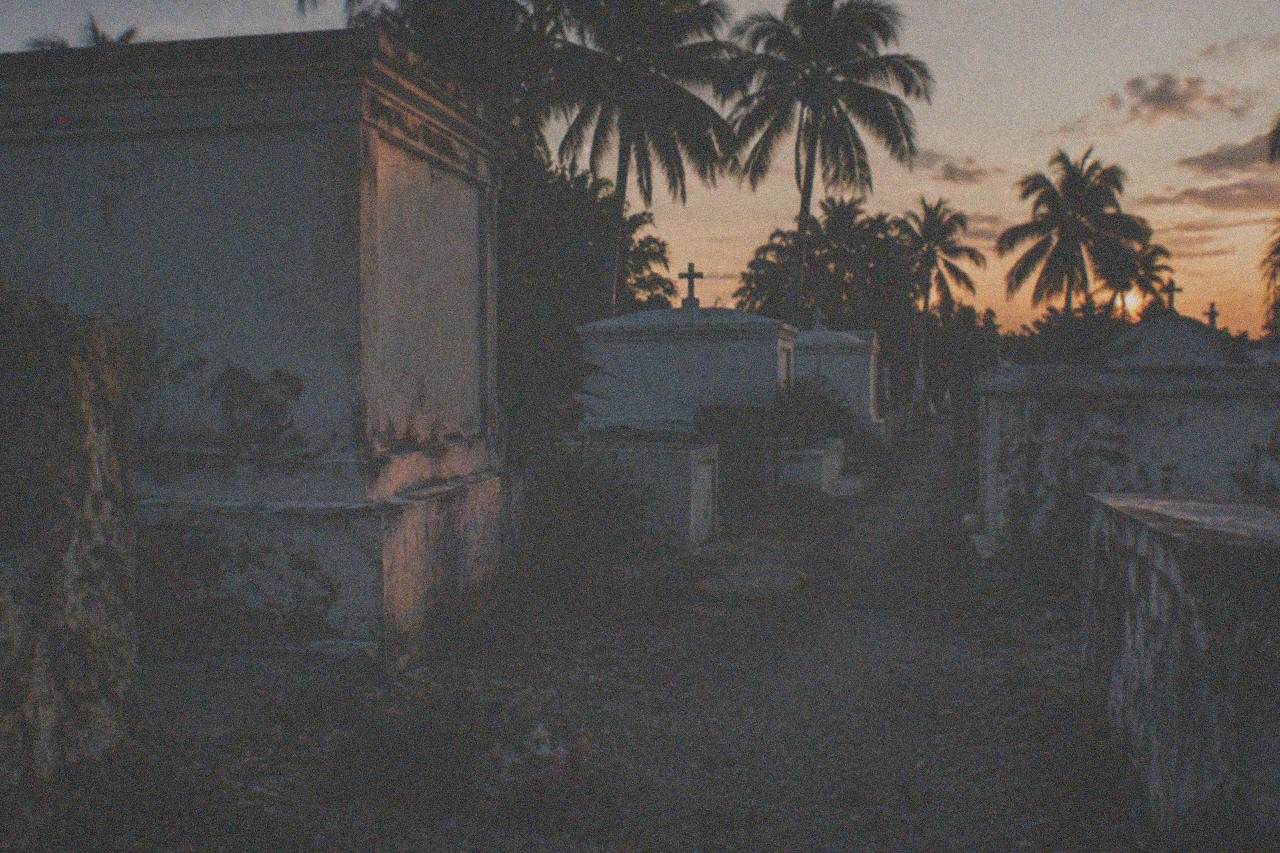
Elena Hoyos was buried in the Key West Cemetery, the active 19-acre city ground at 701 Passover Lane founded in 1847 on Solares Hill, the island's highest natural point. The cemetery is open to visitors today, and no tour on this site's roster makes it a dedicated stop, though several walking tours tell the Tanzler story nearby.
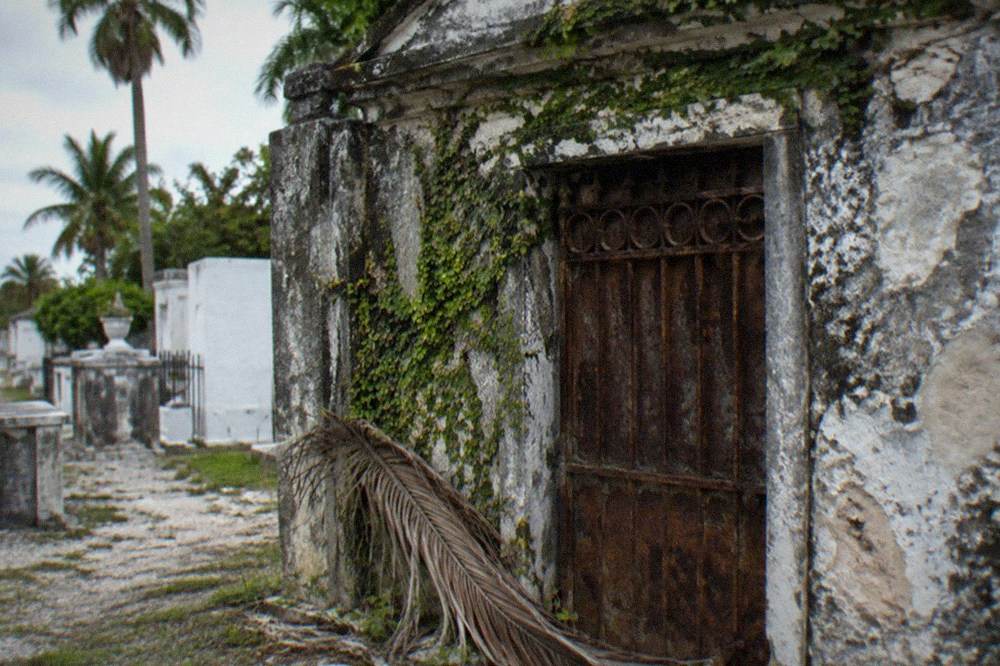
The cemetery is a real, working municipal operation, run by the City of Key West with historic sections and private family plots, as the city's own cemetery and parks pages state. It was established in 1847 after the October 1846 hurricane destroyed earlier coastal burial grounds near Whitehead Point and scattered bodies, which is why the new ground went up on the island's highest ground. Sections reflect the community that built it: a historic Catholic section added in 1868, a small Jewish section, the USS Maine plot dedicated in 1900, and Los Martires de Cuba. Estimates of the total burials run from around 70,000 to 100,000 depending on the source.
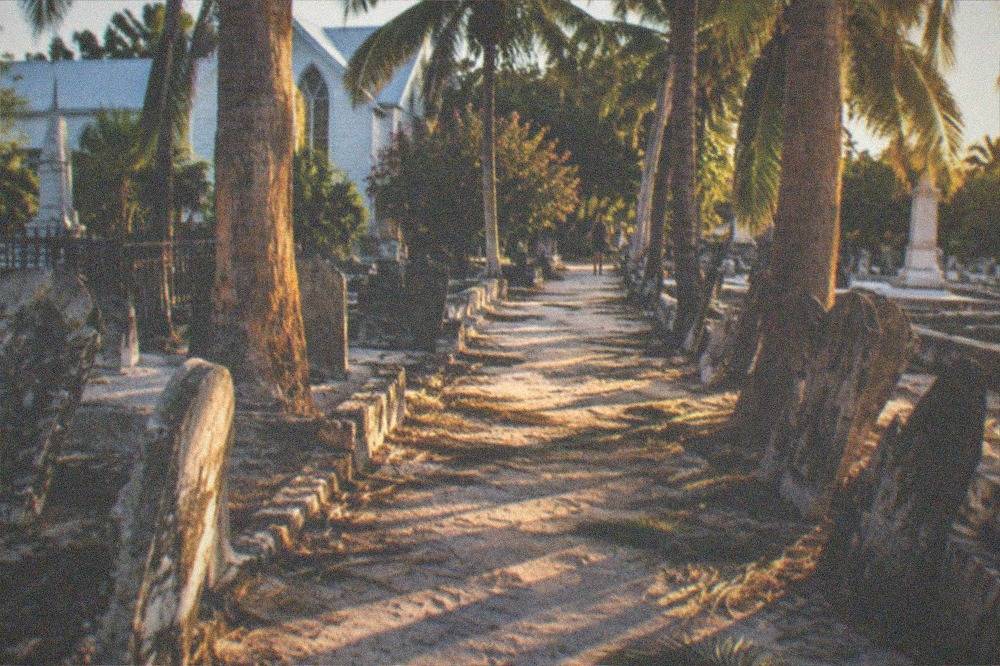
Visitors come for the famous epitaphs as much as the history. B.P. Roberts's headstone is the one everyone photographs, its "I Told You I Was Sick" wording verified across multiple independent news and history sources and commonly cited by local tour and history sources. "Sloppy" Joe Russell, the bar owner and Hemingway associate, is also buried here. Local tour and paranormal sites describe reported sightings and sounds after dark, including an apparition described as a Bahamian woman, a child's voice, and a described presence near Elena Hoyos's former mausoleum site. Those are tour-operator and enthusiast-site storytelling, not documented phenomena, and this site labels them as such.
If you want a guided cemetery visit, the honest options are limited and worth knowing. The Historic Florida Keys Foundation runs small-group "Cemetery Strolls" as fundraising events, about 90 minutes with interpreters sharing stories at gravesites, with a $20 suggested donation and reservations required. Those are separate, non-affiliate events, not products on this site's roster. On this roster, no tour makes the cemetery its dedicated stop. The Ghost and Mysteries Walk is the closest bookable walking product, covering Old Town haunted sites on a route from 429 Caroline St, and our dedicated Key West Cemetery ghost tour planning guide lays out self-guided visiting in full.
A walking ghost tour of Old Town is the natural pairing with a self-guided cemetery visit: one tells the stories where the streets are, the other lets you stand at the gravesites quietly.
Is The Tanzler Story Real History Or Ghost Lore?
The Tanzler case is real, documented history: a 1931 death, a body removed from the Key West Cemetery, and a 1940 discovery, all part of the historical record. The hauntings, the apparitions near the former mausoleum, and the stranger embellishments are ghost-tour lore layered on top. Knowing which is which is the whole point of retelling the case honestly.
The distinction matters more here than on almost any other page in this site's library. Key West ghost walks blend three kinds of material: documented history, attributed folklore, and pure entertainment. The Tanzler case is the strongest documented anchor the industry has. The folklore built around it, a weeping figure near the cemetery, sounds in the old vaults, the romantic framing of the story as a love story rather than a violation, is storytelling. It can be good storytelling. It is still storytelling.
There is a second honesty test, and it is about the victim. Elena Hoyos was a real young woman who died of a real disease at a time when her community had few defenses against it. The best retellings, including several on the island's better walking tours, treat her as a person and the case as a documented tragedy. The weakest retellings flatten her into a prop in Tanzler's story. When you compare tours, listen for which version you are getting. A guide who knows the difference between "the museum's own framing describes" and "it is a fact that" is a guide who has done the reading.
If that documented-versus-lore distinction appeals to you, there are formats on this roster built around it. The Equipment Ghost Hunt (16+) from Key West Ghost Hunt puts dowsing rods, EMF meters and a spirit board in your hands across several haunted locations over 90 minutes, from $45, meeting at 301 Whitehead St; it carries a 4.6 across 112 reviews. It is 16 and over only, capped at 16 travelers. That is the format for people who want to test the stories rather than just hear them.
The other kind of honest tour is the plain historical walk: no meters, no claims, just a good route and a guide with receipts.
How Do Key West Ghost Walks Tell The Tanzler Story?
Walking ghost tours across Old Town tell the Tanzler case as their centerpiece documented story, with the Ghost and Mysteries Walk as this site's featured telling: a 90-minute guided walk from 429 Caroline St, from $33, carrying a 4.5 across 1,130 reviews, capped at 16 travelers. Pub crawls and fort ghost hunts tell adjacent stories rather than the Tanzler case itself.
The Ghost and Mysteries Walk, run by Key West Ghost and Mysteries Tour, is the roster's most-reviewed walking product and its default best overall pick for a first Key West ghost tour. It passes Robert the Doll's former home and the La Concha hotel, with dowsing-rod demonstrations for spirit activity along the way. The Tanzler-era Key West of Elena Hoyos's community was centered in exactly this part of the island, which is why the walk's route works as a storytelling frame for the case even though the cemetery itself is not a stop.
For an adults-only telling, the Dark Side of Key West Ghost Tour from Ghost City Tours of Key West leans into the island's darker documented cases, from $34.99, 90 minutes, meeting outside St Paul's Episcopal Church at 401 Duval St, capped at 30 travelers, with a 4.6 across 354 reviews. Its sibling, the family-oriented Haunted History Walk, from $29.99, is the cheapest walking product on the roster and keeps the storytelling light enough for kids.
Pub crawls split the difference between ghost tour and bar crawl. The Bone Island Pub Crawl from Key West Promotions, from $32.20, runs about 2 hours from 424 Greene St with an 8:30pm start, through two haunted mansions and a repurposed morgue, including a free souvenir t-shirt, and it is the most-reviewed pub crawl on the roster at 4.5 across 618 reviews. It is 21 and over.
Then there is the fort. The Fort East Martello Ghost Hunt from Sloan's Key West Ghost Tours, from $99, is a 2-hour after-dark experience at 3501 S Roosevelt Blvd: a guided fort tour, a seated encounter with Robert the Doll, then an independent paranormal investigation with ghost-hunting equipment, capped at 25 travelers, at 4.7 across 173 reviews. Sloan's is the operator descended from that 1996 founding of the island's ghost tour industry, and its fort access is exclusive after-hours territory, which is why the fort hunts cost what they cost.
| Format | Best for | Entry price | Rating and pool |
|---|---|---|---|
| Walking ghost tour (Ghost and Mysteries Walk) | First-timers, documented history told on the street | From $33 | 4.5 across 1,130 reviews |
| Adults-only dark walk (Dark Side of Key West) | Grown-up retellings of the darker cases | From $34.99 | 4.6 across 354 reviews |
| Equipment ghost hunt (16+) | Testing the stories yourself | From $45 | 4.6 across 112 reviews |
| Fort East Martello Ghost Hunt | Robert the Doll plus equipment investigation | From $99 | 4.7 across 173 reviews |
| Bone Island Pub Crawl | Haunted history with drinks, 21+ | From $32.20 | 4.5 across 618 reviews |
Comparing formats across the whole roster, with honest numbers, is the job of our best Key West ghost tours comparison guide. If your interest is specifically the island's documented dark cases, our roundup of the most haunted places in Key West separates the real history from the campfire layer site by site.
How Do You Visit The Tanzler Story Sites Yourself?
Visit the Key West Cemetery at 701 Passover Lane in daylight for the gravesites and the famous epitaphs, then Fort East Martello Museum at 3501 S Roosevelt Blvd, open daily 10:00 a.m. to 5:00 p.m. with last admission at 4:30 p.m., adults $17 or $15.50 online, with free on-site parking. Finish with an evening ghost walk through Old Town.
The cemetery first. Go early or late in the day for the light photographers want, wear real walking shoes, and treat it as what it is: an active burial ground where families are responsible for maintaining their own historic plots. Give strollers and services a wide berth. The Historic Florida Keys Foundation's Cemetery Strolls, when scheduled, are the best guided option, around 90 minutes with interpreters at the gravesites for a $20 suggested donation, reservations required. Those are fundraising events, separate from anything bookable on this site.
The three stops pair naturally into a single full day, and the logistics are manageable because everything sits on a small island. Here is how the pieces fit together.
| Stop | Why it connects to the case | Visit planning |
|---|---|---|
| Key West Cemetery, 701 Passover Lane | Elena Hoyos's burial place, founded 1847 on Solares Hill | Daylight hours, free to walk, Cemetery Strolls about 90 minutes with a $20 suggested donation |
| Fort East Martello Museum, 3501 S Roosevelt Blvd | The case's era edge of the island, holding the Robert the Doll exhibit | Daily 10:00 a.m. to 5:00 p.m., last admission 4:30 p.m., adults $17 or $15.50 online, free parking |
| Old Town evening ghost walk from 429 Caroline St | The streets where the case-era community lived | 90 minutes, from $33, book ahead in October |
Fort East Martello is a different kind of stop. The Civil War-era fort at the island's southern edge, next to the airport, holds the Robert the Doll exhibit among its permanent displays, and the museum's official visit page carries the current hours and admission shown above. Robert himself, per his own documented story, was a Steiff-made doll given to a Key West boy around 1904 and donated to the museum in 1994, and the fort's tales about him are the museum's own framing, not verified phenomena. The fort's Civil War construction is real history: Key West stayed Union-controlled during the war even as many local citizens supported the Confederacy. Recent local coverage notes roughly $1 million in county drainage, parking and restoration work around the fort through 2026, with free on-site parking on a new permeable surface. Transit serves the airport a few minutes' walk away, and a taxi or rideshare from Old Town runs about 10 minutes.
The evening is where the bookable products come in, and a ghost walk is the natural end of a Tanzler-themed day. The Ghost and Mysteries Walk's 90-minute route from 429 Caroline St threads the Old Town streets where the case unfolded. If you would rather go deeper on equipment, the Haunted Firehouse Investigation from Sloan's Key West Ghost Tours, from $95, about 2 hours at the historic 1907 firehouse, combines an audio tour with an independent paranormal investigation capped at 13 people per night; it carries a 5.0 from 11 reviews, a small pool honestly stated, and small pools swing with a single review.
Every product on this site's roster carries free cancellation on the listing, which matters in a town where October evenings fill fast. For a fuller walk-through of what an evening tour actually feels like, hour by hour, see our what to expect on a Key West ghost tour guide, and for timing, October and the Fantasy Fest period are the island's documented peak for spooky-season demand.
Common Questions About The Carl Tanzler And Elena Hoyos Story
Is the Carl Tanzler story real?
Yes. The core of the case is documented history: Elena Hoyos died of tuberculosis in 1931, and Carl Tanzler is documented to have removed her body from the Key West Cemetery years later, keeping it at his home until the discovery in 1940. Surrounding hauntings and embellishments are ghost-tour lore, not record.
Who was Elena Hoyos?
Elena Hoyos was a young Key West woman from the island's Cuban American community who died of tuberculosis in 1931 and was buried in the Key West Cemetery. The best retellings treat her as a real person rather than a prop in Tanzler's story.
Is Carl Tanzler buried in Key West?
Tanzler's later life and burial are outside the verified facts this site holds, and secondary sources drift on the details. Stick with the documented core of the case, the 1931 death, the removal from the cemetery, and the 1940 discovery, and treat later-life specifics as unverified.
Where is Elena Hoyos's grave?
She was buried in the Key West Cemetery, the active 19-acre city ground at 701 Passover Lane. Local tour and paranormal sites describe a presence near her former mausoleum site, which is tour storytelling, not documented phenomenon. The cemetery is open to respectful daytime visitors.
Can you take a ghost tour about the Tanzler story?
No tour on this site's roster makes the Tanzler case a dedicated stop, but the Ghost and Mysteries Walk, from $33 with a 4.5 across 1,130 reviews, tells documented Key West cases on an Old Town route, and the cemetery can be visited on your own or through the Historic Florida Keys Foundation's separate Cemetery Strolls.
Is Key West Cemetery worth visiting?
Yes, for the history alone: founded in 1847 on Solares Hill after the 1846 hurricane destroyed earlier burial grounds, holding an estimated 70,000 to 100,000 burials, with famous epitaphs commonly cited by local tour and history sources. Go in daylight, wear walking shoes, and respect an active burial ground.
The Tanzler case holds up precisely because it asks nothing of your belief. The record is the record: a death in 1931, a theft from the city cemetery, a discovery in 1940. Everything Key West Ghost Tours can honestly add is the setting, the streets and the gravesides where it happened, and the guides who tell it straight.