Is Key West Haunted?
An honest look at Key West's haunted reputation: the documented history, the museum-framed legends, and how to tell a real ghost story from tour marketing.
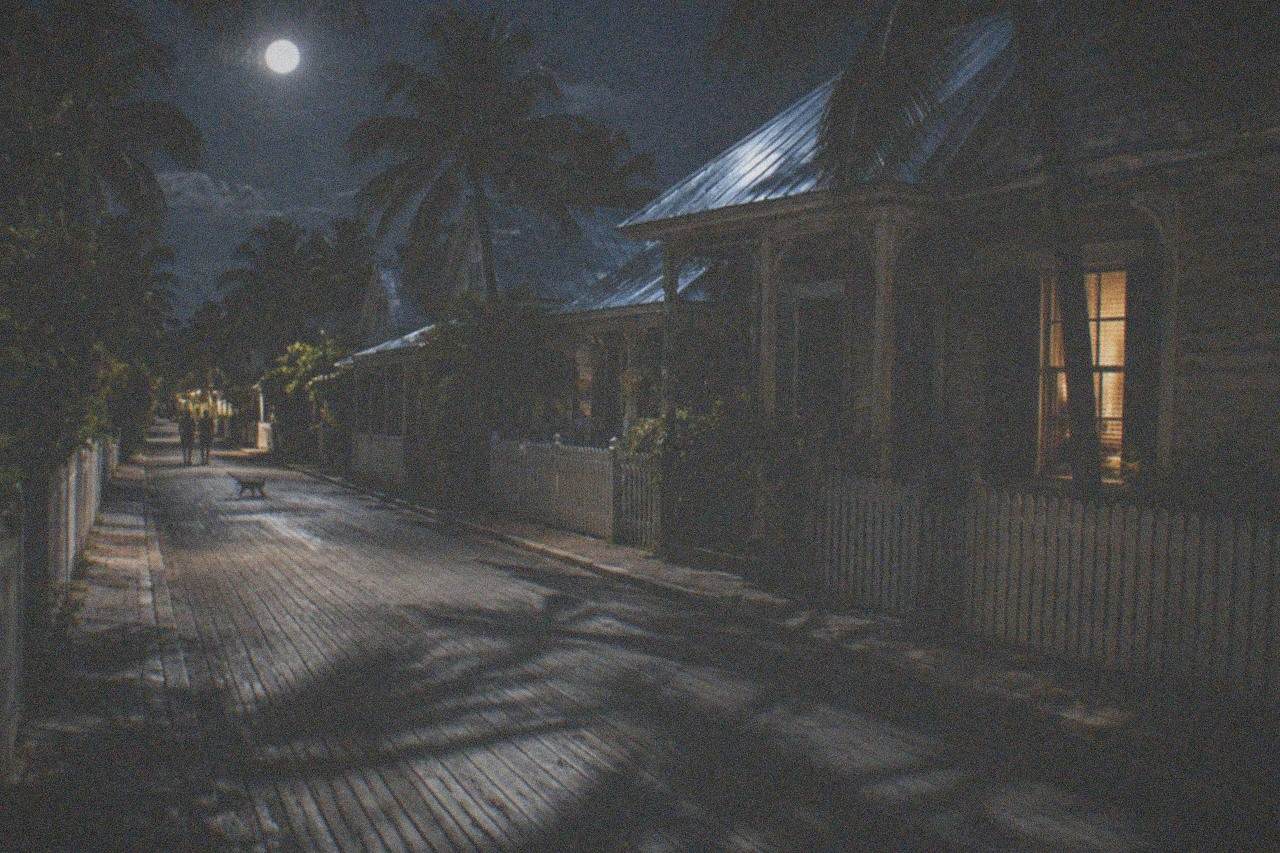
Is Key West Haunted?
Yes, in the honest sense of the question: Key West carries an unusually dense record of documented, grim history, from a Civil War fort to a 19-acre cemetery founded after a hurricane exhumed the dead, and to one of the strangest body-snatching cases in American records. The ghosts themselves are a different matter. Nobody has ever documented one. What the island has instead is 30 years of professional storytelling built on that real foundation.
That split is the whole story. Strip away the lantern-lit walk gimmicks and the marketing copy, and Key West still holds an authentic haunted-history portfolio: a Union-controlled Civil War fort that now displays a doll blamed for divorces and car crashes, a cemetery holding an estimated 80,000 to 100,000 burials on the island's highest ground, and a documented case in which a local man removed his dead patient's body from the cemetery and kept it at home for years.
Local tour operators lean on that foundation hard, and mostly honestly. The Key West Ghost Tours roster itself runs twelve bookable products across four formats: one trolley, three fort ghost hunts, five walking tours, and three pub crawls. Every one of them sells a version of the same question you are asking right now. And in October, when Fantasy Fest pulls costume crowds onto Duval Street, that question gets asked even more often.
The fair answer is layered. Key West is a place where terrible, verifiable things happened at a rate most small cities never match: yellow fever epidemics, shipwrecks, hurricanes that scattered coffins across the reef. It is also a place where the ghost-tour industry dates to 1996, when David L. Sloan launched what local histories describe as the city's first organized ghost tour, an operation still running nearly three decades later. The stories grew up around the history, not the other way around.
So if you are deciding whether to spend an evening chasing spirits here, you have two real options. You can walk the documented sites yourself for free, or you can book a guide who knows which graves are real and which jokes are inherited from a 1996 script. This comparison is the honest place to start.
Those three represent the spread of formats: the most-reviewed walking product, the only trolley, and the most-reviewed pub crawl. The rest of this article separates the real history from the performance layer, because the difference matters to how much you enjoy either one.
What Real Haunted History Does Key West Actually Have?
The documented core is three things: Fort East Martello, a Civil War-era brick fort now run by the Key West Art and Historical Society; the Key West Cemetery, established in 1847 after an 1846 hurricane destroyed earlier burial grounds near the beach; and the Carl Tanzler case, a real body-removal episode recorded in Key West history. None of that is folklore. All of it predates every ghost tour on the island.
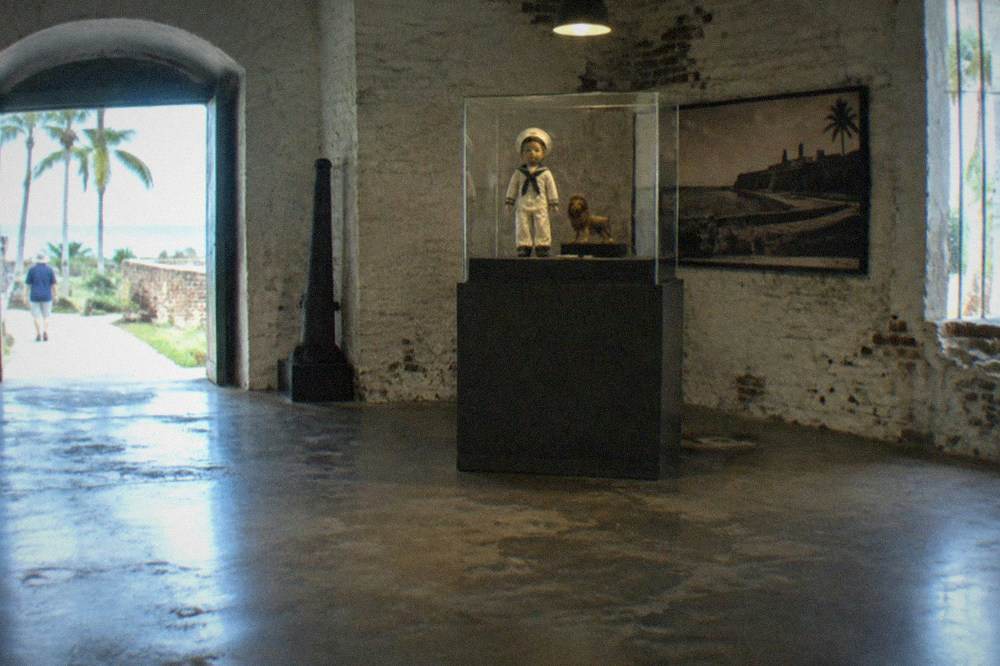
Start with the fort. Fort East Martello was built as a Civil War fortification, and the museum's own history section opens on an odd fact: Key West stayed under Union control through the war even though most local citizens sympathized with the Confederacy. The building survived, became a museum, and now holds permanent exhibits including "Robert the Doll," "Stanley Papio: Junkyard Rebel," and "Ghosts of East Martello." Admission runs $17 at the door or $15.50 online, and the museum is open daily from 10:00 a.m. to 5:00 p.m. with last admission at 4:30, per the museum's official page. None of that is spooky. It is simply a real Civil War military structure on the Atlantic edge of an island with a violent weather record.
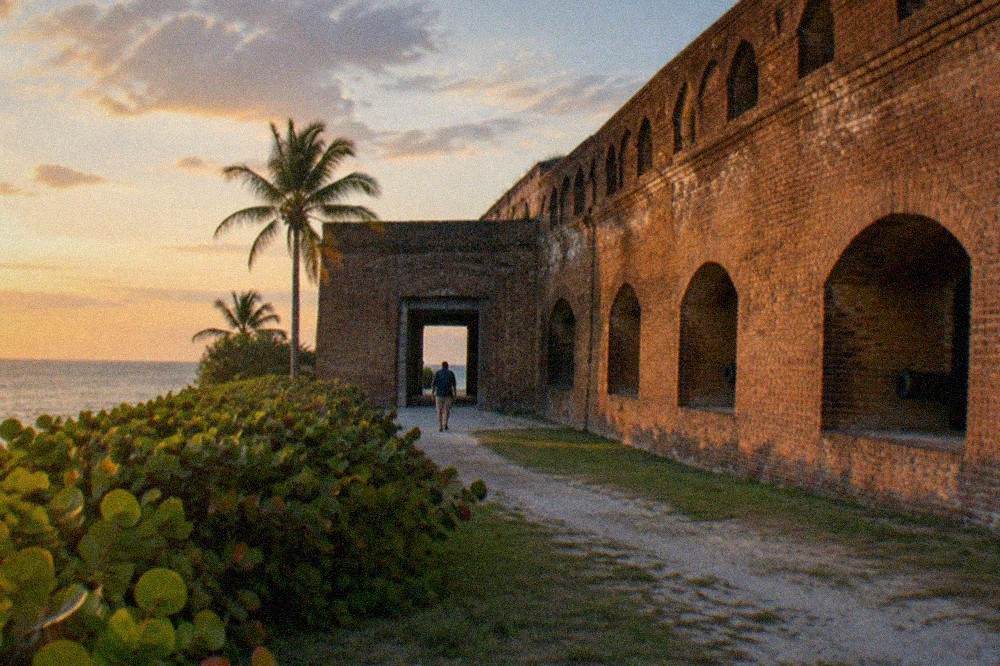
The cemetery is even more concrete. The city of Key West owns and operates it, and its official municipal pages describe an active, 19-acre burial ground at 701 Passover Lane. It was established in 1847 on Solares Hill, the island's highest natural point, specifically because the October 1846 hurricane had wrecked the earlier coastal burial grounds and scattered bodies. When a city rebuilds its cemetery on a hill because the ocean keeps digging up its dead, that is not a ghost story. That is municipal trauma with a paper trail, including a Catholic section added in 1868, a Jewish section, a USS Maine plot dedicated in 1900, and a Los Martires de Cuba memorial.
Then there is Tanzler. Carl Tanzler, who used the alias Count Carl von Cosel, is documented as a Key West resident who became infatuated with a young tuberculosis patient, Elena Hoyos, who died in 1931. He is documented as having removed her body from the Key West Cemetery years after her death and keeping it at his home until the discovery in 1940. Tour scripts embellish freely around the edges of this case, and exact details should be read with "documented as" caution, but the skeleton of the story, literally, is a real case. Our full writeup lives in the Carl Tanzler and Elena Hoyos story guide.
Here is the honest scoreboard, site by site.
| Site | What Is Documented | What the Tours Add |
|---|---|---|
| Fort East Martello | Civil War construction, KWAHS operation since, Robert on display since a 1994 donation | Haunted-doll framing, "one of America's 10 Most Haunted Destinations" claims in operator materials |
| Key West Cemetery | 1847 founding after the 1846 hurricane, 19 acres, 80,000-100,000 burials, active city cemetery | Apparition and voice sightings described as folklore by tour and enthusiast sites |
| The Artist House, 534 Eaton St | Built 1890-1898, childhood home of artist Robert Eugene Otto | Attic footsteps and giggling, presented by the doll's official site as family lore |
| Capt. Tony's area bars | Real historic saloon buildings, including a former morgue site cited in tour descriptions | Drinking-with-ghosts narratives on the pub crawls |
The pattern is consistent. Underneath every legend sits a verifiable fact, and the legend always arrived later, usually via a tour script. If you want to see several of these sites in one evening with a guide who keeps the two layers straight, the "Ghost and Mysteries Walk" passes Robert the Doll's former home and the La Concha hotel on a 1.5-hour route from 429 Caroline Street, from $33 per person.
Bookings on that walk carry free cancellation on the listing, which matters in a town where October weather and Fantasy Fest plans can shift on short notice. The Ghost and Mysteries Walk tour page has the full route and schedule details.
Where Does The "Most Haunted City" Reputation Come From?
The reputation comes from three stacked sources: real yellow-fever, shipwreck and hurricane mortality in the island's past, a 1996 origin for the modern ghost-tour industry, and a self-reinforcing loop of operator marketing and national listicles. Operator materials reference a USA Today list naming Fort East Martello among America's 10 Most Haunted Destinations. No independent body measures or ranks hauntings, so the title circulates without any way to verify it.
The historical layer earns the reputation. Yellow fever epidemics struck the island repeatedly across its early history, shipwrecks fed the wrecking economy that built the island's mansions, and hurricanes repeatedly killed and then unburied the dead. A city with that much mortality packed into a mile of coral rock does not need to invent ghosts; it just needs a narrator.
The industry layer is more recent than most visitors assume. Local histories describe David L. Sloan launching Key West's first organized ghost tour in 1996, one of the earliest in the country, an operation that introduced ghost-hunting equipment to public tours on the island and is still running under family ownership. By now, sources describe more than a dozen companies offering ghost tours or related experiences in a town you can walk end to end in an afternoon. Sloan also authored several Key West haunted-history books, including one on Robert the Doll, which is why the doll's story sounds so polished when a guide tells it.
The marketing layer is where honesty requires care. Tour and operator sites describe Key West as "consistently ranked as one of the most haunted cities in the United States," a phrasing repeated so often it reads as citation but traces back to the tours themselves. USA Today's Fort East Martello mention is real and widely referenced in recent operator materials. Beyond that, no recent city-level ranking names Key West among America's most haunted cities, which is exactly the kind of gap a good guide should admit rather than paper over.
None of this makes the reputation false. It makes it manufactured in the sense that a reputation always is: built by people with an incentive to build it, on top of raw material that was already there. The Ghost and Mysteries Walk, the most-reviewed walking product on our roster at 4.5 across 1,130 reviews, is a good example of the genre done with a straight face, its guides demonstrating dowsing rods at stops while telling you which parts are lore.
If you would rather judge the island's haunted density yourself, the most haunted places in Key West guide walks through the sites one by one, with the same documented-versus-legend split applied to each.
Which Sites Are Real History And Which Are Folklore?
The clean dividing line runs between what a museum, city archive, or historical record states and what a tour script asserts. Fort construction dates, cemetery founding, burial counts, and the Tanzler case are documented. Robert the Doll's origins are documented; his powers are the museum's own narrative framing. Attic footsteps, apparitions in the cemetery, and bad-luck curses are folklore, presented as folklore by the very sources that popularized them.
Robert the Doll is the perfect test case because his official biography is unusually well sourced. He was made by the German Steiff Company around 1904, stands 40 inches tall, is stuffed with excelsior, and wears a sailor suit that belonged to Gene Otto, the Key West boy who received him. Gene grew up in the Artist House at 534 Eaton Street, built between 1890 and 1898, became a prominent local artist, and even designed the art gallery at Fort East Martello. The official story page records all of that plainly.
Then the same page shifts register. Gene's parents reportedly heard him talking to the doll and hearing a different voice answer. The family reportedly saw the doll's expression change. After Gene's death in 1974, the doll stayed at the Artist House with a later owner, Myrtle Reuter, who in 1994 donated him to the Key West Art and Historical Society, saying he had moved on his own and was haunted. Note the verbs: reportedly, presented as, saying. The museum's own site frames these as family lore and its own narrative, not as verified phenomena. Honesty here means using the same verbs.
The bad-luck framing gets the same treatment. The museum's official material says visitors send apology letters on a daily basis after experiencing misfortune they attribute to photographing Robert without permission. That sentence is fully true, and fully about visitor belief rather than doll behavior. Recent coverage repeats the pattern: visitors blame him for car crashes, broken bones, and even divorces, per a museum-curator interview in recent news coverage, while hundreds of letters and emails arrive annually from people apologizing for photos or mockery. Belief in Robert is measurably real. Robert's influence is not.
The cemetery folklore deserves the same care. Tour and enthusiast sites describe an apparition of a Bahamian woman in vintage clothing, a child's voice, and a presence near Elena Hoyos's former mausoleum. No official or primary historical documentation of paranormal activity at the cemetery exists; the tour and enthusiast sites presenting these stories treat them as legend and entertainment. The famous "I Told You I Was Sick" headstone, belonging to B.P. "Pearl" Roberts, is commonly cited by local tour and history sources, and the city's own strolls program tells the story, though we treat the exact inscription wording as tour-source lore rather than a directly confirmed photograph. That is the honest confidence level, and it is still a great story.
One more boundary worth knowing: no tour on our roster is dedicated to the cemetery. The city-supported "Cemetery Strolls," run by preservation foundations with reservations and a suggested donation, are a separate, non-commercial program. Commercial walks reference the cemetery in broader island lore, and the closest bookable walking product is the Ghost and Mysteries Walk. If your question is specifically about graves, the Key West Cemetery visitor guide covers what you can and cannot book.
Is The Carl Tanzler Story Real Key West History?
Yes. The Tanzler case is the strongest evidence behind the question, precisely because it is not a ghost story. Carl Tanzler, a Key West X-ray technician using the alias Count Carl von Cosel, is documented as removing the body of Elena Hoyos from the Key West Cemetery years after her death from tuberculosis in 1931, and keeping it at his home until discovery in 1940. No paranormal claim is needed; the records alone do the work.
Read the case as history and it explains a lot about the island's reputation. A small island community, a beautiful young woman dead of tuberculosis, a fixated technician who treated her corpse as a companion for nearly a decade, and a discovery that made national newspapers. Exact details, names, and spellings vary across sources, with Tanzler appearing as both "Carl Tanzler" and "Carl von Cosel," and our facts file advises reading specific dates as "documented as" rather than quoting them as forensic fact. The broad case is secure. The embellishments, including Tanzler's own later memoir-style retellings and the romantically haunted tone tour guides add, are the folklore layer.
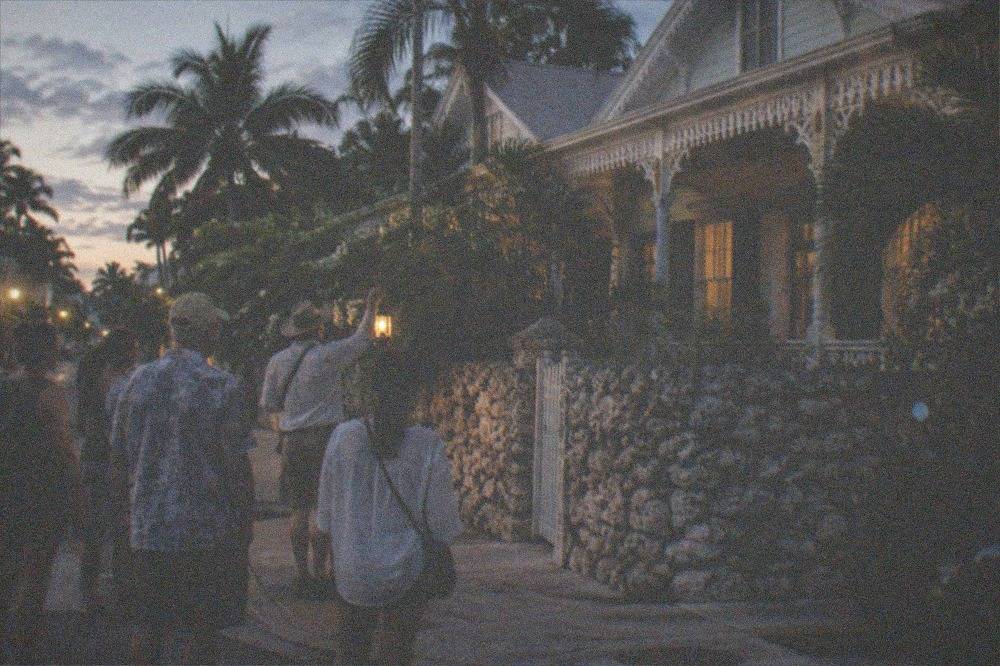
Ghost-tour scripts use the case heavily. Several Old Town walking tours pass the cemetery's edge and tell the story by lantern light, and pub crawl guides use it as a midway shock beat. The telling is fair; Tanzler is documented history. What varies is how clearly each guide signals where the record ends and the performance begins. That signal, or its absence, is the single best quality marker for any haunted tour in this town.
If the case catches your interest, we treat it in full, with dates flagged where the record is soft, in the Tanzler and Hoyos deep-dive guide. For most visitors the takeaway is simpler: Key West's darkest famous story requires no belief in ghosts at all, which is exactly why it convinces skeptics and believers alike.
How Do You Tell A Good Ghost Tour From Pure Marketing?
Judge a tour by three checks: whether the guide attributes legends instead of asserting them, whether the route passes documented sites you could verify yourself, and whether the format matches what you actually want, equipment investigation, history walk, trolley ride, or bar crawl. The roster here splits cleanly into those formats, with honest ratings and review counts that show the split: the most-reviewed products are the story-first walks, not the equipment hunts.
The format question is practical. A trolley ride covers more ground and suits visitors who want the broad overview: the "Trolley Of The Doomed" from Historic Tours of America runs 1 hour from $39.85, rated 4.4 across 1,392 reviews, the second most-reviewed product on the roster. A walking tour slows down and lets you stand inside the scenes: the Ghost and Mysteries Walk at 4.5 across 1,130 reviews is the most-reviewed walking option, and the budget-friendly "Haunted History Walk" at 4.3 across 140 reviews takes a family-oriented route past St Paul's Episcopal Church and the Audubon House. An investigation puts equipment in your hands: the "Equipment Ghost Hunt (16+)" from $45 uses dowsing rods, EMF meters and a spirit board, and the "Fort East Martello Ghost Hunt" at 4.7 across 173 reviews includes a seated encounter with Robert the Doll plus independent investigation time, from $99.
| Format | Product | Price From | Rating and Reviews | Duration |
|---|---|---|---|---|
| Trolley | Trolley Of The Doomed | $39.85 | 4.4 across 1,392 reviews | 1 hour |
| Walking | Ghost and Mysteries Walk | $33 | 4.5 across 1,130 reviews | 1.5 hours |
| Walking, family | Haunted History Walk | $29.99 | 4.3 across 140 reviews | 1.5 hours |
| Walking, adults only | Adults-Only Dark Side Walk | $34.99 | 4.6 across 354 reviews | 1.5 hours |
| Investigation | Equipment Ghost Hunt (16+) | $45 | 4.6 across 112 reviews | 1.5 hours |
| Investigation, fort | Fort East Martello Ghost Hunt | $99 | 4.7 across 173 reviews | 2 hours |
| Pub crawl, 21+ | Bone Island Pub Crawl | $32.20 | 4.5 across 618 reviews | 2 hours |
A few honesty notes on that table. The review pools vary enormously, from 1,392 down to 26 for the "Southernmost Shadows Walk," and a small pool is worth knowing about before you book, which is why we print the counts. One pub crawl, the "Sunset Pier Pub Crawl," is a newer listing with no rating shown yet; state that plainly and move on, rather than inventing a score. And the private "Private Group Ghost Walk" is priced at $137.50 for the whole group, not per person, which makes it a different purchase entirely.
The marketing check is simpler than the numbers. A good guide says "the museum's own framing describes" or "local lore holds." A weak guide says "it is said" and then adds a curse for flavor. The strongest operators in town, including the family business that pioneered the format in 1996, explicitly avoid jump scares and theatrical gimmicks, and that restraint is itself a signal of a tour that trusts its material. The trolley, by contrast, is openly entertainment, and that is fine as long as you know which one you bought.
October deserves one final planning note. Fantasy Fest 2026 runs October 16-25 with the theme "Musical Icons and Iconic Musicals," and the festival pulls the year's biggest crowds into Old Town, with ghost tours promoted as part of the seasonal draw. Book ahead in that window, and expect the streets the walks use to be at their busiest, and their most theatrical. Any other month, the same tours run nightly with more room to hear a guide properly.
So, back to the opening question. Is Key West haunted? The documented history is dark, dense, and unusually well preserved for an American small city. The ghosts are unverified, the haunting claims are the museum's and the operators' own framing, and the best tours in town are honest enough to say so to your face. That combination, real history plus openly told legend, is exactly what keeps the island's reputation alive, and it is a genuinely good evening out whether or not anything supernatural ever joins you.
Common Questions About Haunted Key West
Is Key West Haunted?
Key West has a dense record of documented, grim history, including a Civil War fort, a cemetery holding an estimated 80,000 to 100,000 burials, and the real Carl Tanzler case. The hauntings themselves are folklore and museum framing, never independently verified. The island's reputation is built on that real history, told by an industry that dates to 1996.
What Is the Most Haunted Place in Key West?
Operator materials most often name Fort East Martello, citing a USA Today list of America's 10 Most Haunted Destinations, and it houses Robert the Doll on permanent display. Our detailed breakdown of the candidates, with the documented-versus-legend split applied to each, is in the most haunted places guide on this site.
Is Robert the Doll Real?
The doll is real: a one-of-a-kind Steiff Company piece made around 1904, 40 inches tall, displayed at Fort East Martello since a 1994 donation. His documented biography includes Gene Otto and the Artist House. The hauntings, the expression changes, and the bad-luck-after-photograph claims are the museum's own narrative framing, not verified phenomena.
Is the Carl Tanzler Story True?
Yes, in outline. Tanzler is documented as removing the body of Elena Hoyos, who died of tuberculosis in 1931, from the Key West Cemetery and keeping it at his home until the discovery in 1940. Exact dates and spellings vary across sources, so treat fine details with caution, but the case itself is a documented part of Key West history, not a ghost story.
Can You Visit Key West's Haunted Sites Without a Tour?
Yes. Fort East Martello charges admission and is open daily, the cemetery is a public city burial ground you can walk in daylight, and Old Town's haunted exteriors are free to stroll at night, with the free Mallory Square sunset gathering nearby. The cemetery's own escorted strolls are a separate preservation program requiring reservations, not a commercial ghost tour.
Do Any Ghost Tours Visit the Key West Cemetery?
No tour on this roster makes the cemetery its dedicated stop. Commercial walks reference it in broader island lore, and the closest bookable product is the Ghost and Mysteries Walk, which covers Old Town sites like the La Concha hotel and the Artist House. The city-linked Cemetery Strolls are a separate, reservation-based program supporting restoration work.