What Is The Oldest Grave In Key West Cemetery?
The honest answer to which grave is oldest in Key West Cemetery, why the exact marker cannot be verified, and how to visit the 1847 graveyard on Solares Hill.
What Is The Oldest Grave In Key West Cemetery?
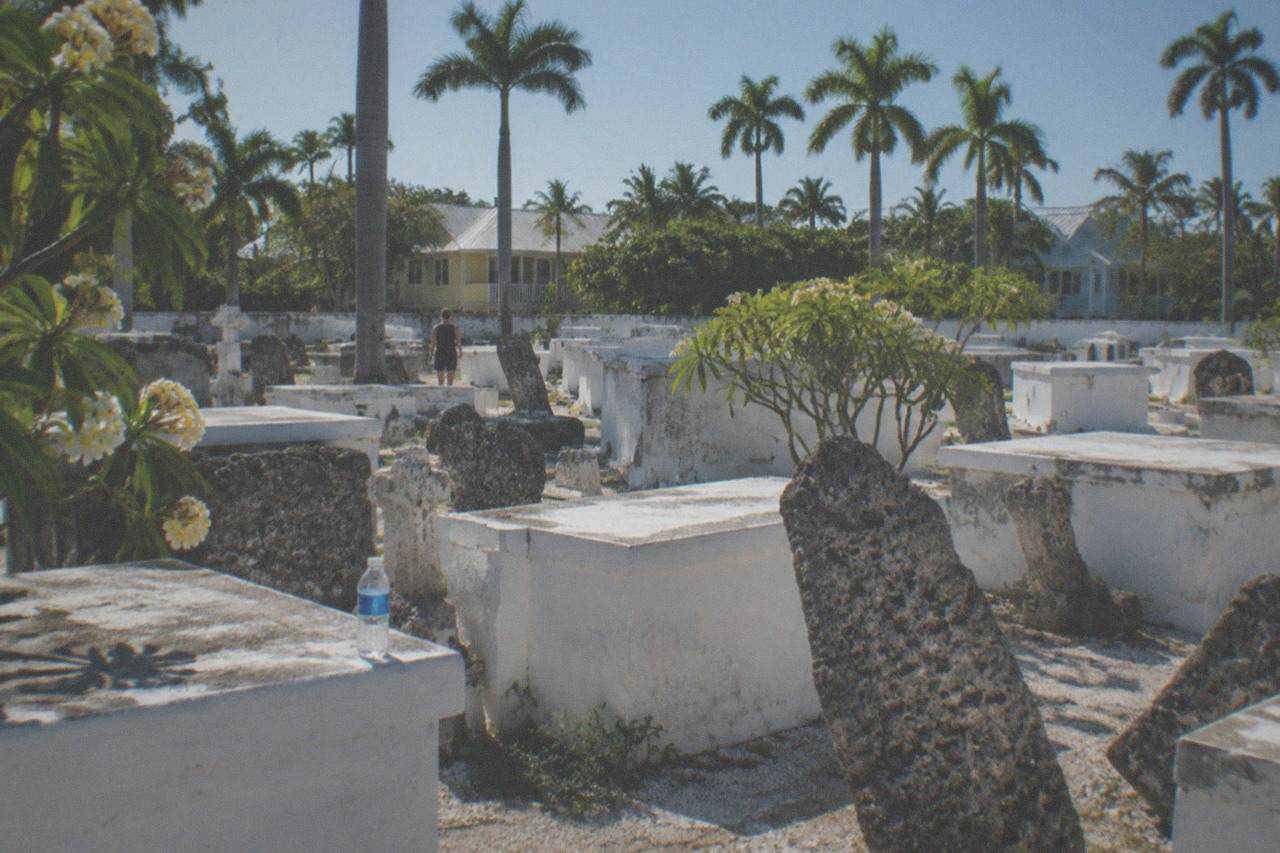
No single grave can be pointed to as the oldest with a verified date. The cemetery itself was founded in 1847 on Solares Hill, and some markers relocated from earlier burial grounds reportedly carry dates as early as 1829, but local history sources treat those stones as moved rather than original burials, so an exact oldest grave remains unconfirmed.
That answer surprises people who expect a tidy founding grave, the way older northern cemeteries have one. Key West's graveyard history is messier than that. The city's burial grounds were originally near the shoreline at Whitehead Point and Higgs Beach, and they were destroyed on October 11, 1846, when a hurricane tore through the island and scattered coffins and bodies across the flats. Local and historical accounts of that storm describe bodies washed into mangroves and floated out to sea, an event that horrified the community and forced a permanent rethink of where the dead should rest.
The response came the following year. In 1847 the city purchased land on Solares Hill, the highest natural point on the island, and established what is now the Key West Cemetery at 701 Passover Lane. The hill's elevation was the whole point: a graveyard on high ground above the reach of storm surge could not be flooded out the way the shoreline plots had been. The City of Key West's own cemetery page records the site as a 19-acre active municipal cemetery the city still operates today.
The complication for anyone hunting the oldest grave is that stones from the pre-1847 grounds did not simply vanish. Some markers and, reportedly, some remains were moved up the hill to the new cemetery after 1847. Enthusiast and local history sites describe carved stones in the older sections bearing dates as early as 1829 and 1843, which would predate the cemetery itself. But a stone's carved date tells you when someone died, not when the marker arrived on that spot, and no city record confirms which relocated marker came first. The honest reading is that the oldest legible inscriptions are relics of the lost shoreline cemetery, not graves originally dug on Solares Hill.
Why The 1846 Hurricane Forced A New Cemetery
The hurricane of October 11, 1846 destroyed Key West's original coastal burial grounds near Whitehead Point and Higgs Beach, scattering earlier graves. The city responded in 1847 by buying land on Solares Hill, the island's highest natural ground, and founding the cemetery that still operates there today as an active municipal site.
The scale of the 1846 storm is hard to picture now. Key West at the time was a small port town, and its dead were buried in sandy shoreline plots that offered no protection against a direct hurricane strike. Historical accounts describe the storm surge stripping those plots open entirely. Families who could identify remains reburied them; many could not. The psychological weight of that event shaped Key West's civic decisions for a generation, and it is the single reason the cemetery sits where it does.
Solares Hill was the obvious refuge. At roughly the island's highest natural elevation, it gave the graveyard a defense the shoreline never had, and the city's initial purchase was a 100-lot tract. From there the cemetery grew in layers that still read clearly if you walk the sections: a historic Catholic section added in 1868, a small Jewish section in the southeast, the USS Maine plot dedicated in 1900 after the battleship's explosion in Havana Harbor, and Los Martires de Cuba, a memorial honoring Cuban independence martyrs. Each addition is a chapter of the island's population, Bahamian, Cuban, African American, Spanish, and American, buried in distinct quarters of the same nineteen acres.
Estimates of how many people rest there vary. The city's own materials note a range of roughly 80,000 to 100,000 burials, and some sources put the figure as low as 70,000. The spread itself tells you something: this is a working cemetery with dense, layered, sometimes poorly documented plots, not a curated historic site with a registrar who can name the first tenant. That is exactly why the oldest-grave question resists a confident answer.
Once you have had your fill of the hillside and its quiet records, the bookable haunted side of the island begins back down in Old Town, where the walking tours, trolley rides, and ghost hunts cluster around Duval Street. If you are weighing how an evening tour fits into a day that already includes a self-planned cemetery visit, these three formats cover the range most travelers choose between.
| Year | Event | Why It Matters For The Oldest-Grave Question |
|---|---|---|
| 1829 | Earliest death date reportedly carved on a relocated stone | Predates the cemetery; stone was moved from the shoreline site |
| 1843 | Another reportedly relocated marker date | Same caveat, moved rather than originally buried here |
| Oct 11, 1846 | Hurricane destroys the coastal burial grounds | Scattered earlier graves and forced a new site |
| 1847 | City founds the cemetery on Solares Hill | The oldest original burials on this ground begin here |
| 1868 | Historic Catholic section added | Shows the cemetery grew in waves, not all at once |
| 1900 | USS Maine plot dedicated | Later layer tied to the Spanish-American War |
One planning note while you are weighing a visit: the cemetery sits a good walk from the Duval Street strip, up a quiet residential hill. Go in the cooler morning hours, wear real shoes, and expect uneven ground between the older sections. There is no shade to speak of on the upper slopes.
What Are The Oldest Marked Graves You Can Actually Visit?
The oldest inscriptions visible today are reportedly the relocated stones carrying dates of 1829 and 1843, set into the older sections after they were carried up from the destroyed shoreline grounds. No official record confirms which came first, so treat any specific grave named as the oldest as local tradition rather than documented fact.
Walking the older parts of the cemetery, you notice the material history before anything else. Key West's ground is porous coral rock and a water table close to the surface, which is why so many graves here are above-ground crypts and stacked structures rather than flat lawns. Early markers that did stand at ground level have weathered badly. Salt air, tropical storms, and generations of humidity have eaten soft limestones down to faint scratches, and more than a few of the oldest inscriptions are now legible only in photographs taken decades ago.
That decay is not a static problem. Local news outlets have covered preservation fights at the cemetery through 2025 and 2026 with unusual detail. Exposed human bones were reported at a plot in both January and April of 2025, prompting a state investigation and recommendations for ground-penetrating radar and archaeologist supervision. A debate over two large strangler fig trees, one reportedly around ninety-six inches in diameter and damaging nearby graves, was postponed by the city commission into 2026. And a city-backed brick fundraising campaign launched in late 2025 to pay for repairs to neglected historic gravesites, with the mayor personally fronting the revitalization committee.
The practical takeaway for a visitor chasing the oldest graves is patience and lowered expectations. The famous stones people photograph, the epitaphs and the odd tilted crypts, are mostly from later decades. The genuinely old markers are fewer, less dramatic, and harder to read. Anyone who tells you a specific grave is definitively the oldest is passing along local lore, and the city's own records do not settle it.
If your morning on the hill leaves you wanting a guided version of the island's haunted history, the evening walking tours are the natural next step, and the most-reviewed walking product among them is an easy one to fit around a day of self-guided sightseeing.
Who Is Buried In Key West Cemetery?
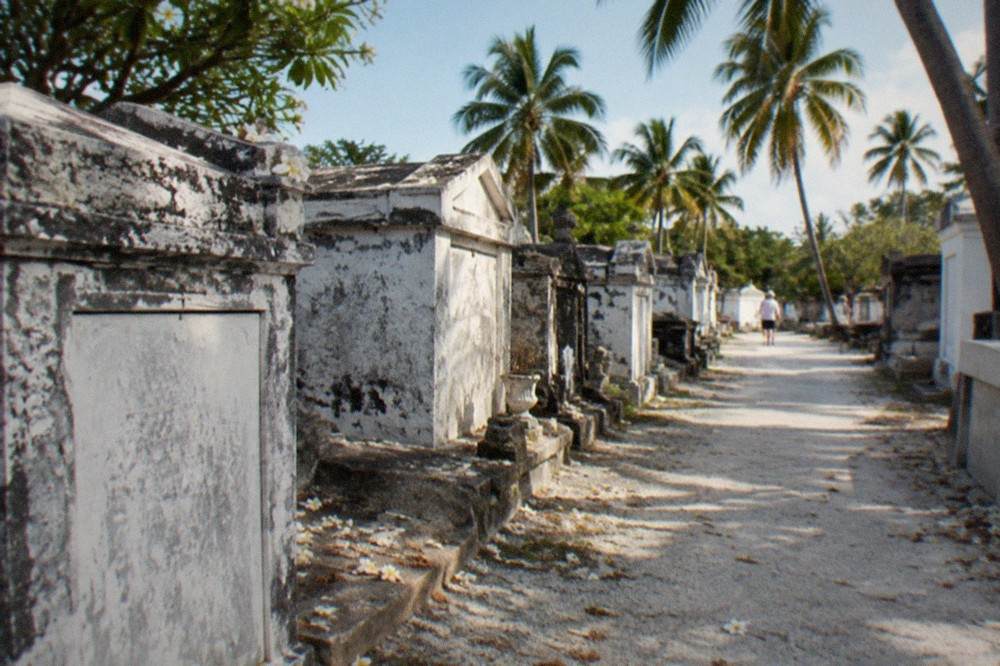
The cemetery holds an estimated 80,000 to 100,000 burials across its historic sections, including Sloppy Joe Russell, the bar owner and Hemingway associate, B.P. Pearl Roberts of the I Told You I Was Sick epitaph, sailors from the USS Maine plot, and Cuban independence martyrs of Los Martires de Cuba.
The famous names are genuinely famous, at least in Key West terms. Joseph Russell, known as Sloppy Joe, ran the saloon Ernest Hemingway drank at and was one of the writer's closest fishing companions; his grave draws visitors who know the bar's name from Duval Street signage. The USS Maine plot holds crew members recovered from the battleship's explosion in Havana Harbor, the event that helped launch the Spanish-American War, and the anchor-shaped monument over it is one of the most photographed features in the grounds. Los Martires de Cuba memorializes Cuban exiles and independence fighters, reflecting the island's long entanglement with its nearby neighbor.
The much-quoted epitaph belongs to B.P. Pearl Roberts, who died in 1979. Local tour and history sources, including a Miami Herald feature and Atlas Obscura's entry on the cemetery, consistently render her headstone as reading I Told You I Was Sick, a line that suits a town with a sense of humor about itself. A nearby crypt carries a companion line about resting eyes. Those modern oddities get the attention, but the older stones, the moved markers with the earliest carved dates, are the ones that answer the age question, and they are unglamorous by comparison.
The deeper draw is the demographic layering. Bahamian families who built the island's early labor force, Catholic and Jewish communities, Navy men, wreckers, cigar makers from Cuba, and a legendary hypochondriac all share one hill. If your interest is more in who is buried there than in exact dates, the sibling piece on famous Key West Cemetery burials digs into the notable graves in detail. For the darker corner of the story, the documented case of Carl Tanzler and Elena Hoyos, a real historical episode that ended in the cemetery's own mausoleum row, is covered in the Carl Tanzler and Elena Hoyos story elsewhere on this site.
Can You Visit The Cemetery On A Guided Tour?
Yes, but not through a commercial ghost-tour booking. The Historic Florida Keys Foundation runs scheduled Cemetery Strolls, small-group escorted walks of roughly 90 minutes with a $20 suggested donation, by reservation, plus self-guided brochures for independent visitors.
The Cemetery Strolls are the closest thing to an official guided experience. Interpreters lead small groups to gravesites and deliver short monologues about the people beneath the stones, and the suggested donation funds restoration and education work at the cemetery. The Key West Chamber of Commerce has publicized recent strolls including a January 11, 2026 date, and reservations are handled by phone or email through the foundation. If your question is purely historical, these strolls are the best-value option in town.
Self-guided touring is also entirely reasonable. The cemetery is a public municipal site, open during daylight, and the historic sections are walkable in an hour to ninety minutes at a slow pace. Brochures and printed maps have been produced through the preservation foundation, and many visitors simply wander the older sections reading stones. Go in the morning before the sun is high, carry water, and remember this is an active cemetery with families still visiting recent graves, so the usual quiet courtesy applies.
| Way To See The Cemetery | Format | Approximate Cost | Best For |
|---|---|---|---|
| Cemetery Strolls | Small-group guided walk, ~90 minutes | $20 suggested donation, reservations required | History, restoration support, interpreter stories at gravesides |
| Self-guided walk | Independent daylight visit | Free | Budget travelers and photographers on their own schedule |
| Commercial haunted walking tour | Guided Old Town route | From $33 per person | Haunted storytelling, though no roster tour dedicates itself to the cemetery |
One boundary worth stating plainly: no commercial ghost tour on this site's roster makes the cemetery a dedicated stop. The walking tours cluster in Old Town, around Duval Street and its haunted buildings, and the ghost hunts operate at Fort East Martello and the 1907 firehouse. The cemetery is a separate, self-planned visit, and the honest advice is to build it into a morning rather than expecting a booked tour to deliver you there.
Does Any Ghost Tour Stop At Key West Cemetery?
No tour on this site's roster is dedicated to the cemetery. The closest bookable walking product is the Ghost and Mysteries Walk from Key West Ghost and Mysteries Tour, which runs 1.5 hours from $33 with a 4.5 rating across 1,130 reviews, and its route stays in Old Town, passing Robert the Doll's former home and the La Concha hotel.
That does not make the commercial tours irrelevant to a cemetery visit; it just means they cover different ground. The Ghost and Mysteries Walk, operated by Key West Ghost and Mysteries Tour, meets at 429 Caroline Street and moves through the haunted center of town, with dowsing-rod demonstrations and storytelling at the La Concha and the Artist House where Robert the Doll once lived. It caps groups at sixteen travelers, which keeps the guide audible on crowded evenings, and every booking carries free cancellation. For visitors who want haunted history with actual research behind the stories, it is the default pick among the walking products, and its tour page with full route details explains exactly what it covers. It pairs naturally with a self-planned morning at the cemetery on the following day.
If your interest in the island's dark history runs deeper than a walk can go, the Fort East Martello Ghost Hunt is the roster's deep-dive option: a two-hour after-dark experience at the fort, from $99, that pairs a guided tour with a seated encounter at Robert the Doll's case and an independent paranormal investigation using ghost-hunting equipment. It holds a 4.7 rating across 173 reviews and caps the night at twenty-five travelers. The fort and the cemetery bookend the same island story in different ways, one a Civil War structure above the reef, the other a hillside full of hurricane refugees.
For travelers who want their haunted history with a drink in hand, the Adults-Only Dark Side Walk covers Key West's seamier legends on a 1.5-hour route from $34.99, holding a 4.6 rating across 354 reviews with a thirty-person cap. It meets outside St Paul's Episcopal Church on Duval Street, squarely in the Old Town zone where the walking tours operate, again nowhere near the cemetery gates. That geographic pattern is consistent across the roster: the bookable haunted experiences cluster in the historic core, and the cemetery remains the one major haunted-adjacent site you visit on your own terms.
Planning a whole haunted weekend around these choices is easier if you compare the formats honestly. A trolley ride covers more ground with less walking, a walking tour delivers denser storytelling, a ghost hunt adds equipment and access, and a pub crawl adds the bars. The roster's walking, trolley, and crawl options are compared piece by piece in the best ghost tours in Key West guide, which lays out price, duration, and meeting point for each format side by side.
Is The Cemetery Itself Considered Haunted?
Local ghost-tour and paranormal sites describe reported sightings at the cemetery after dark, including an apparition described as a Bahamian woman in vintage clothing, a child's voice, and a presence near the former mausoleum tied to the Elena Hoyos story. These are folklore and tour-operator storytelling, not documented phenomena, and no primary source verifies them.
The honest framing matters here because the cemetery's real history is strange enough without embellishment. A hurricane that scattered the dead across a shoreline, a documented body-snatching case that ended at the cemetery's mausoleum row, above-ground crypts stacked against a coral hill: none of that requires a ghost story to be compelling. But the paranormal framing is persistent, and enthusiast and tour-operator sites describe those reported figures and sounds at the site. Presented as what those sources describe, the folklore is a real part of how Key West markets itself; presented as fact, it would be something this site cannot verify, and so it stays labeled.
The historical anchor that draws ghost-story fans to the cemetery is the Tanzler case. Carl Tanzler, a hospital technician who styled himself Count von Cosel, became fixated on a young tuberculosis patient, Elena Hoyos, who died in 1931. He is documented to have removed her body from her mausoleum years after her death and kept it at his home until the discovery in 1940, a case that made national newspapers and remains one of the strangest documented episodes in Florida history. Exact dates in the case should be read with reported qualifiers, since sources vary on details, but the core events are a matter of record, not legend.
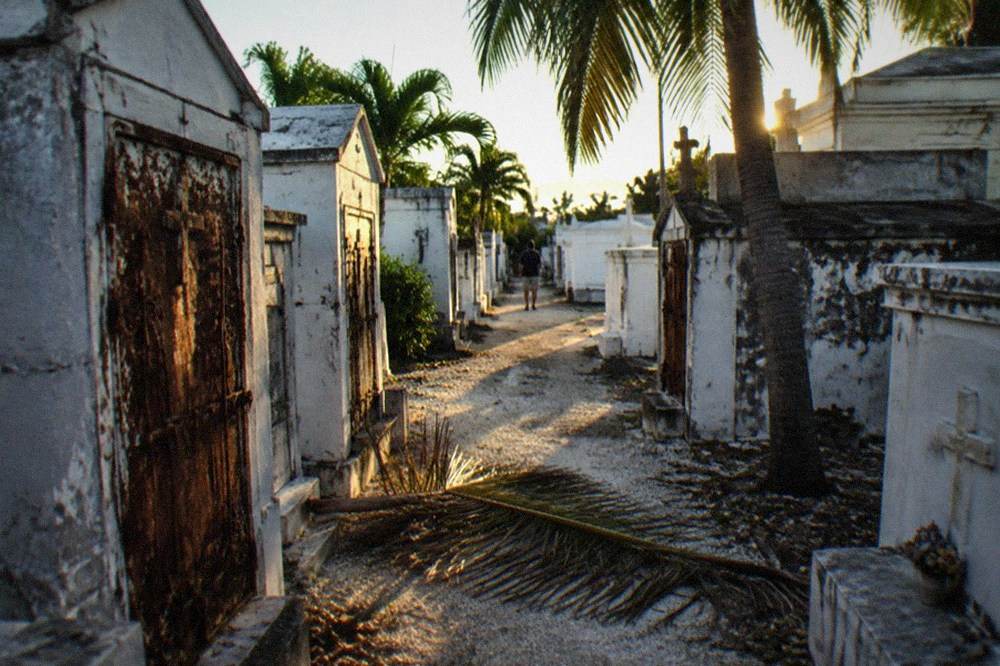
Whether or not anything walks there at night, the city does not run the grounds as a nighttime attraction. Visits happen in daylight, the preservation work is the focus of the news that comes out of the site, and the responsible way to engage with its haunted reputation is to learn the documented history underneath it. The strolls and the self-guided brochures both lean on fact rather than fright, which is a reasonable standard for a place that is still burying island families.
How Should You Plan A Visit Around The Age Question?
Visit in the morning, give yourself ninety minutes to two hours, and go looking for layers rather than a single oldest stone. The relocated markers with 1829 and 1843 dates, the 1847 founding story, and the section-by-section growth of the hill tell the age story better than any one grave, and the oldest original burials are quietly scattered through the older sections.
Start at the main entrance on Passover Lane and work uphill. The oldest sections sit in the parts of the grounds first developed after 1847, and the moved stones from the destroyed shoreline cemetery are, per local history sources, among them. Read a handful of stones in each section rather than hunting one tombstone: the dates jump around, because the cemetery was filled in waves as the community grew. The Catholic section from 1868, the Jewish section, the Maine plot, and Los Martires de Cuba each mark a distinct arrival of people to the island.
Bring the practical checklist. Sunscreen and a hat, because shade is scarce on the upper slopes. Closed-toe shoes for the uneven coral and brick paths. Water. A camera if you want it, but be deliberate about photographing stones: this is an active municipal cemetery, and the city notes that families are responsible for maintaining their own historic plots, some of which have no descendants left to tend them. The brick fundraising campaign launched in late 2025 exists precisely because so many of the oldest graves have fallen into disrepair, and a respectful visitor treats those stones as the fragile artifacts they are.
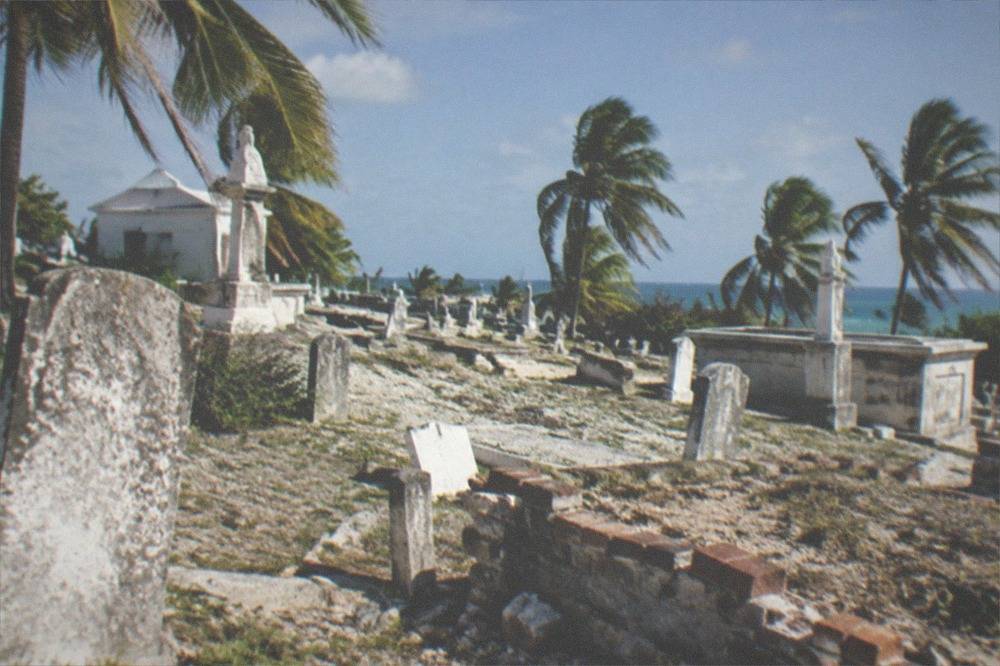
If the age question is what brought you, pair the visit with the historical context that makes it interesting. The cemetery's founding is a hurricane story, its crypts are a geology story, and its sections are an immigration story. The Key West Art & Historical Society, which operates the island's history museums, is a good starting point for primary sources on island history, and a follow-up stop at Fort East Martello rounds out a day of the island's stranger documented past. And if you want the guided haunted experience afterward, the evening walks in Old Town, including the Ghost and Mysteries Walk described above, leave from meeting points within a short stroll of the cemetery gates.
The site you are reading, Key West Ghost Tours, covers the bookable side of the island's haunted offerings in detail, and the cemetery page here is a reminder that some of the best material is self-guided.
Common Questions About The Oldest Grave In Key West Cemetery
What Is The Oldest Grave In Key West Cemetery?
No single grave can be verified as the oldest. The cemetery was founded in 1847, and markers reportedly relocated from the earlier shoreline burial grounds carry dates as early as 1829, but local history sources treat those as moved stones rather than original burials on Solares Hill.
How Old Is Key West Cemetery?
The cemetery on Solares Hill dates to 1847, when the city bought land after the October 1846 hurricane destroyed the earlier coastal burial grounds near Whitehead Point and Higgs Beach. It has been in continuous use as an active municipal cemetery ever since.
Can You Visit Key West Cemetery On Your Own?
Yes. It is an active public municipal cemetery at 701 Passover Lane, open during daylight, and self-guided visits are free. The Historic Florida Keys Foundation also runs scheduled Cemetery Strolls of roughly 90 minutes with a $20 suggested donation, by reservation.
Do Any Ghost Tours Visit Key West Cemetery?
No commercial tour on this site's roster makes the cemetery a dedicated stop. The bookable walking tours, trolley tours, and ghost hunts operate in Old Town and at Fort East Martello. The Ghost and Mysteries Walk from $33 is the closest walking product, but its route stays in the historic core.
Who Is The Most Famous Person Buried In Key West Cemetery?
The most-visited graves include Sloppy Joe Russell, the saloon keeper and Hemingway friend, and B.P. Pearl Roberts, whose I Told You I Was Sick epitaph is commonly cited by local tour and history sources. The USS Maine plot and Los Martires de Cuba memorial draw history-focused visitors as well.
How Many People Are Buried In Key West Cemetery?
Estimates vary by source. The city's own materials note roughly 80,000 to 100,000 burials across the 19-acre grounds, with some sources citing figures as low as 70,000. The range reflects the site's dense, layered, and sometimes imperfectly documented plots.