What Is The Real Story Behind Robert The Doll?
The documented Gene Otto biography behind Key West's famous haunted doll, separated from the folklore, plus how to see Robert at Fort East Martello today.
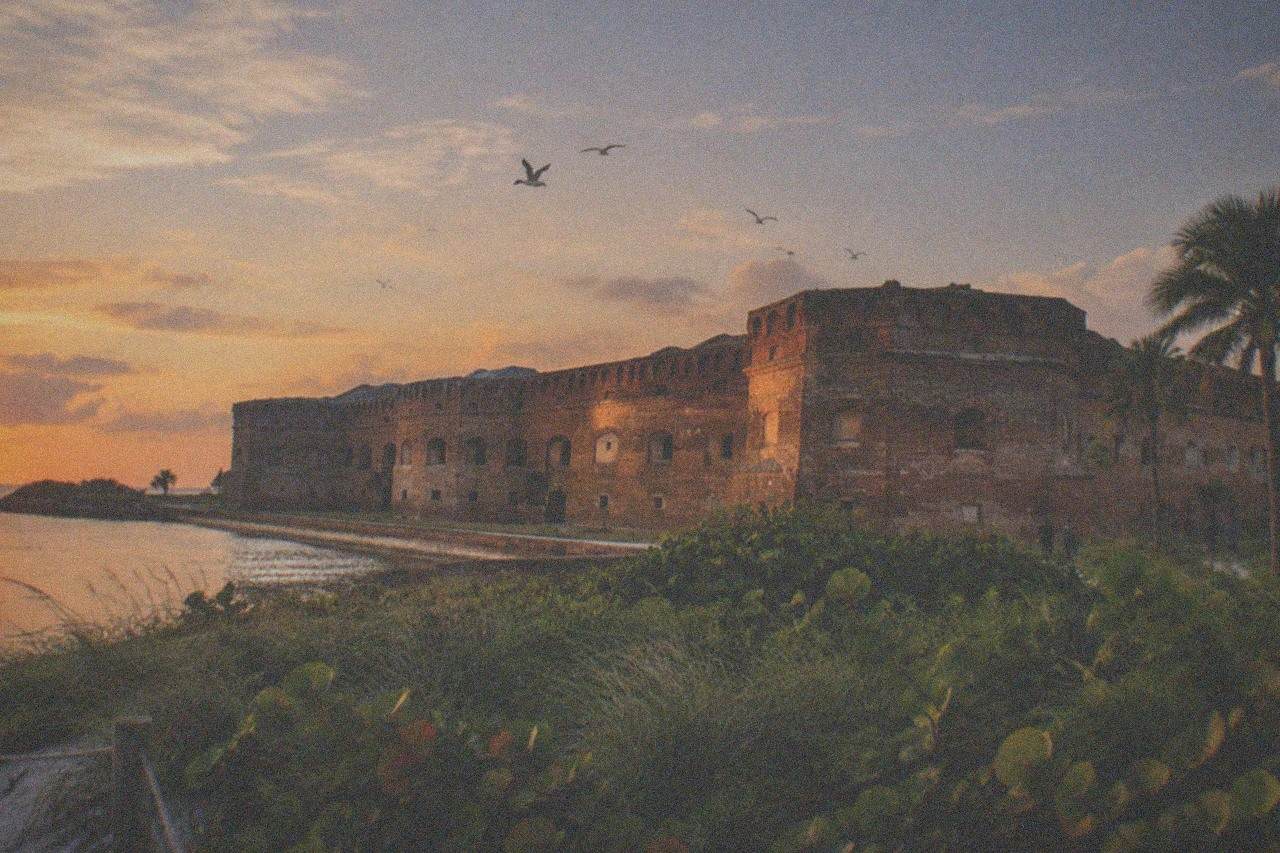
The doll on display at Fort East Martello is real, old, and strange-looking, and almost nothing about the way people talk about him is accidental. He was made by hand around 1904 by the German Steiff Company, stood roughly 40 inches tall, was stuffed with excelsior, and wore a sailor suit that belonged to the boy who received him. Everything beyond that point splits into two piles: a documented Key West biography involving the Otto family of Eaton Street, and a body of folklore that the museum itself presents as legend rather than fact. Sorting the two is the whole point of this story, and it is a story with a paper trail.
What Is The Real Story Behind Robert The Doll?
The real story is that Robert the Doll was a Steiff toy given to Key West boy Robert Eugene Otto around 1904, that Otto kept the doll his entire life, and that a later owner donated it to the Key West Art and Historical Society in 1994. The museum has displayed him at Fort East Martello ever since. The haunting stories are the museum's own framing of family lore, presented as legend on the official site, not as verified events.
That is the short version, and it is worth stating plainly because the internet has blurred it badly. Ask a search engine about Robert and you will mostly get the folklore, sometimes attributed to no one at all, sometimes presented as documented history. The official record on robertthedoll.org's story page is more careful than its imitators: it names the manufacturer, the owner, the house, and the donation, and it flags the supernatural material as what the family reportedly experienced and what visitors reportedly believe.
The distinction matters to anyone deciding how to spend an evening in Key West. The after-dark experiences built around Robert, including the Fort East Martello Ghost Hunt that meets at 3501 S Roosevelt Blvd, sell an encounter with a genuine historical object wrapped in a genuinely old local legend. That combination, a real doll with a real biography inside a real Civil War fort, is exactly why this particular legend outlived the hundreds of haunted-doll stories that came and went in the same era.
If you already know you want to meet him in person after reading this, these three Key West ghost hunts are the formats that put you closest to the story:
Who Was Gene Otto And Where Did The Doll Come From?
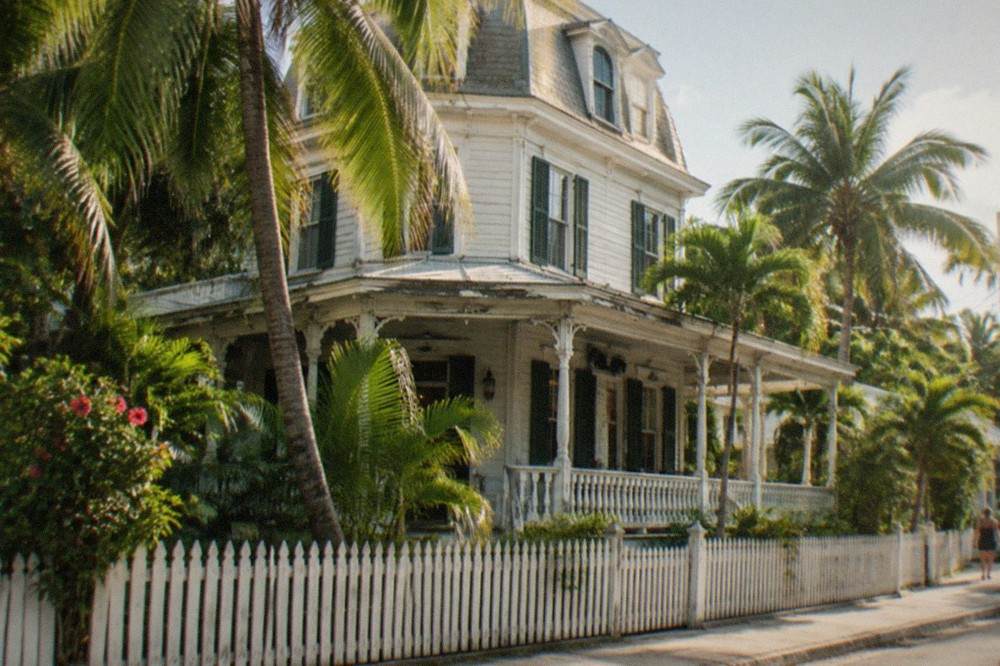
Gene Otto was a Key West artist born into a prominent local family, and the doll was his childhood toy. The verified biography holds that Steiff made the doll around 1904, that young Robert Eugene went by Gene, that he grew up in the Artist House at 534 Eaton Street, and that he became a well-known local painter who designed the art gallery at Fort East Martello before his death in 1974.
The house is where the documented and the legendary start to share a street. Built between 1890 and 1898, the Artist House still stands on Eaton Street, and the story of the doll began inside it. The official account describes a boy who received a one-of-a-kind toy, named it Robert, and then, as a child, reportedly blamed his own misbehavior on it: the quote preserved on the museum's site is Gene insisting "I didn't do it. Robert did it."
What the record supports, and what it does not, breaks down cleanly:
| Claim | Status | Source Of The Claim |
|---|---|---|
| Steiff Company made the doll around 1904 | Documented on the official site | robertthedoll.org |
| The doll is about 40 inches tall, excelsior-stuffed, in a sailor suit | Documented on the official site | robertthedoll.org |
| Gene Otto grew up at 534 Eaton Street and became a local artist | Documented on the official site | robertthedoll.org |
| Gene's parents heard a second voice answer him | Presented as family lore | robertthedoll.org |
| The doll's expression changed in front of witnesses | Presented as family lore | robertthedoll.org |
| A later owner donated the doll in 1994 | Documented | robertthedoll.org |
Gene's adulthood is the part almost nobody retells, which is a shame because it is the best-documented chapter. He married, kept working as an artist, and left a professional mark on the very museum that now houses his childhood doll: the official history credits him with designing the art gallery at Fort East Martello. His wife, Anne, reportedly disliked the doll and had it moved to the attic, and that move is the hinge on which the entire legend swings. After Gene's death in 1974 the doll stayed at the Artist House with the property's later owner, Myrtle Reuter. She is the one who, according to the museum's account, said the doll had "moved on his own" and that he was haunted, and in 1994 she donated him to the Key West Art and Historical Society.
Wondering whether the fort itself lives up to the legend after dark?
The answer, at least as far as the record goes, is that the fort and the doll reinforce each other. Fort East Martello is a genuine Civil War structure with its own documented past, operated by the Key West Art and Historical Society, which runs the museum's official page. Putting a century-old toy with a famous legend inside a real Civil War fort is a pairing few haunted attractions can match, and it is why the Fort East Martello Ghost Hunt, the two-hour after-dark experience that includes a seated encounter with Robert himself, has become the roster's flagship for this story. It runs from $99 and carries a 4.7 rating from 173 reviews.
What Parts Of The Story Are Documented History?
The documented core is short and checkable: the doll's manufacture by Steiff around 1904, its ownership by Gene Otto, his career as a Key West artist, his death in 1974, the doll's years with Myrtle Reuter, and the 1994 donation to the Key West Art and Historical Society. Everything supernatural in the Robert canon, every voice, every footstep, every curse, exists only as reported lore, and the museum's own site says so.
It helps to see the timeline laid out, because the legend tends to scramble the order of events:
| Year | Documented Event |
|---|---|
| 1890-1898 | The Artist House at 534 Eaton Street is built |
| Around 1904 | Steiff makes the doll; Gene Otto receives it as a child |
| 1974 | Gene Otto dies; the doll remains at the Artist House |
| 1994 | Myrtle Reuter donates the doll to the Key West Art and Historical Society |
| 1994 onward | Permanent display at Fort East Martello Museum |
Notice what the timeline does not contain: no documented death, injury, or misfortune attributed to the doll by any verifiable record. The bad-luck stories that circulate online, the car crashes and broken bones and divorces that recent news coverage describes visitors blaming on him, are exactly that, visitor attributions. A November 2025 article quoting the museum's own curator discussed ongoing reports of misfortunes that people connect to the doll, which is a careful way of saying that the reports exist while the connection does not.
The apology letters deserve their own paragraph because they are the folklore's most physical evidence, and they are still museum framing rather than proof of anything supernatural. The official site describes letters arriving, reportedly on a daily basis, from people apologizing for photographing Robert without permission or for mocking him, usually after some misfortune they have decided he caused. Recent coverage has counted those letters in the hundreds per year. The letters are undeniably real, you can see them near his case. What they document is belief, not influence, and the museum is scrupulous about never claiming otherwise.
When Did The Haunted Reputation Start?
The reputation built slowly across the decades following the doll's arrival in 1904, beginning with the Otto family's own reported experiences in the 1900s and the Artist House attic years, then accelerating after the 1994 donation put the doll on public display. The museum's framing, not any single incident, is what turned a family story into an international legend, and internet-era listicles and horror-film coverage did the rest.
The earliest layer is the attic. The official story holds that visitors and neighborhood children around the Artist House reported hearing footsteps and giggling from upstairs and glimpsing the doll in an attic window, and that these accounts belong to the house's earlier decades, not to a museum-era publicity push. That material is presented exactly as family and neighborhood lore, which is the honest way to handle it. Nobody outside the family ever verified a voice, and even the family's claims survive only because Gene's parents reportedly repeated them. For more haunted stops around the island, browse the full Key West Ghost Tours roster.
The 1994 donation is the real inflection point. A doll in a private attic is a rumor; a doll in a glass case at a museum, with a lion companion figure beside him and a plaque telling his story, becomes an attraction. The museum leaned into its own legend, the way many small museums do with famous holdings, and visitors began arriving with cameras and expectations. The "ask permission before photographing him" convention grew out of that exchange: the museum's framing says bad luck follows unauthorized photos, and enough visitors believed it that the apology-letter ritual became self-sustaining.
Internet coverage then did what internet coverage does. Robert has been folded into the same conversation as Annabelle and Chucky, ranked among the world's most haunted dolls in listicles that rarely mention his actual Steiff pedigree or the Otto biography, and loosely credited with inspiring famous possessed-doll fiction, a connection the museum does not claim. A 2027 low-budget Scottish horror film titled "Robert Returns" is similarly unaffiliated with the Key West attraction, though coverage keeps the names entangled. For readers who want the folklore angle developed, the companion piece on why you can't take pictures of Robert the Doll covers the photo ritual and the letters in detail, and the visitor guide to Robert the Doll and Fort East Martello covers the practical side of meeting him.
The legend's popularity has also fed the after-dark market around the fort. Sloan's Key West Ghost Tours, the long-running local operator whose founder authored books on Key West hauntings including one on Robert, built its fort programming on the same combination of documented history and museum-framed legend this article has been separating. Its fort offerings and the independent Equipment Ghost Hunt (16+), a different product from a different operator that meets at 301 Whitehead St and runs dowsing rods, EMF meters and a spirit board through several haunted locations, both trade on the island's broader haunted reputation rather than on Robert alone.
Why Is Robert The Doll At Fort East Martello Now?
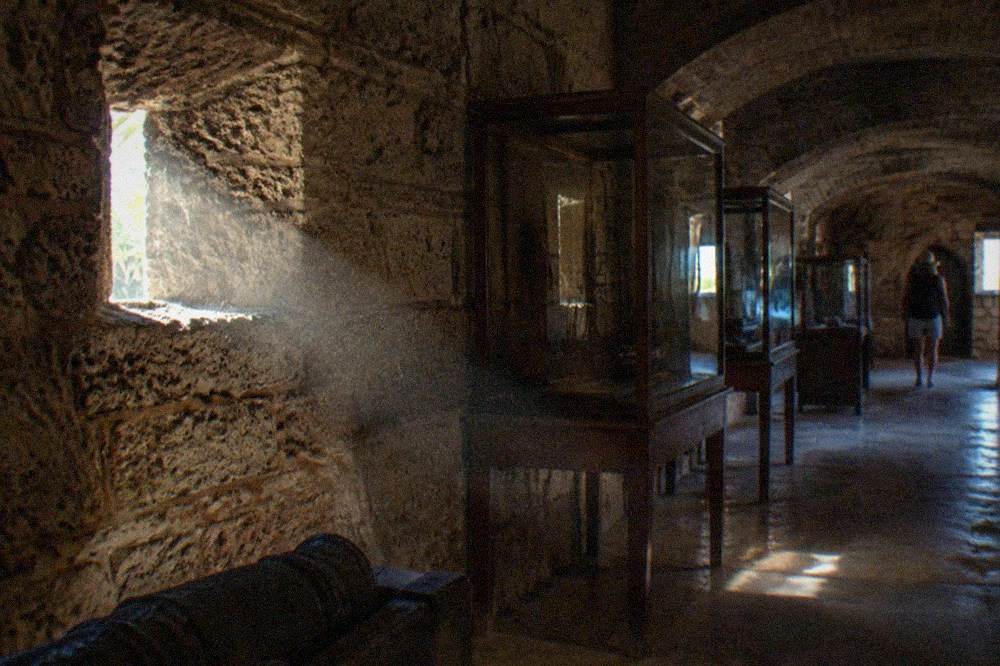
Robert has been on permanent display at Fort East Martello since the 1994 donation, shown in a glass case with a lion companion figure. The fort is a Civil War-era structure at 3501 S Roosevelt Blvd, operated by the Key West Art and Historical Society, open daily from 10:00 a.m. to 5:00 p.m. with last admission at 4:30 p.m., and admission is $17 for adults or $15.50 online.
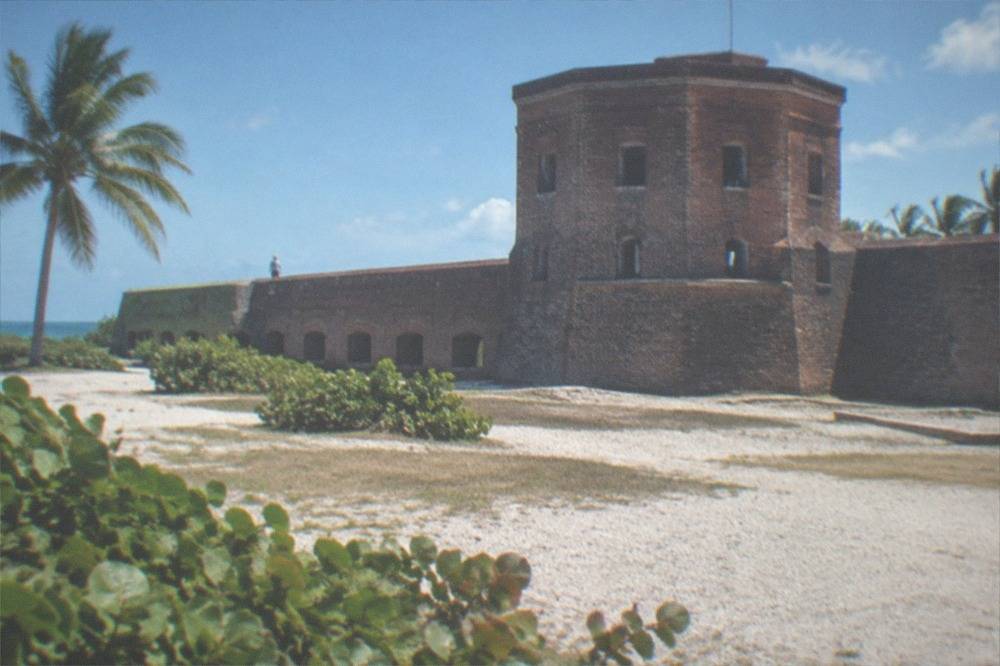
The fit between doll and museum is less arbitrary than it looks. Gene Otto designed the art gallery at Fort East Martello, so the museum already held a piece of the Otto story before it held the doll himself. Placing Robert there closed a loop that began on Eaton Street nine decades earlier, and the museum now lists his display among its permanent exhibits alongside folk-art and fort-history collections. The society's own pages on its main site treat him as a signature holding, not a side exhibit.
Visiting breaks into two very different experiences, and the choice is genuinely a decision, not a formality:
| Way To See Robert | Daytime Museum Visit | After-Dark Ghost Hunt |
|---|---|---|
| Price | $17 adults, $15.50 online, youth $9, under 7 free | From $99 per person |
| Format | Self-guided exhibit viewing during open hours | Guided fort tour, seated encounter, independent paranormal investigation |
| Duration | As long as you like between 10 a.m. and 5 p.m. | About 2 hours |
| Includes | Fort history and folk art exhibits | Ghost-hunting equipment, max 25 travelers |
| Rating | Not a tour, no rating applies | 4.7 from 173 reviews |
The daytime visit is the cheaper and quieter way to stand in front of the case, read the letters, and see the sailor suit up close. The after-dark experience is the only format that builds an evening around the legend, and it is the one the site features: the Fort East Martello Ghost Hunt includes a guided tour of the fort, the seated encounter with Robert, and then time to run ghost-hunting equipment on your own inside the old Civil War fort. Free cancellation applies on the listing, which matters when Key West evening plans shuffle at the last minute.
For travelers who like the investigation format but want a different building, the same operator runs the Haunted Firehouse Investigation inside the 1907 Alex Vega firehouse, another real historic structure with its own small-group format, capped at 13 people per night, from $95. It carries a 5.0 rating from 11 reviews, a small pool so far, and it makes an interesting contrast: the firehouse legend is younger and the review base thinner, while the fort product has the older building, the more famous resident, and the deeper review record.
What Do People Who Visit Robert Actually Report?
Visitor reports from recent years describe a range of reactions, from calm fascination at the glass case to genuine unease in other parts of the fort, with several mentioning spirit-box and dowsing-rod activity during the after-dark tours and praising the guides by name. None of these reports constitutes evidence of anything, and the people making them mostly know that, which is part of why they make such interesting reading.
A February 2026 post on a paranormal forum describes a daytime visit in which the writer felt uneasy and claustrophobic elsewhere in the fort but calm standing next to Robert's case, greeting him, writing on a chalkboard, and then feeling the anxiety return afterward. Recent reviews of the after-dark tours single out guides, one named Dan comes up repeatedly, and describe spirit-box sessions and dowsing rods responding during the seated encounter, along with guests returning the next day on the included daytime pass. Skeptical visitors post too, describing a fun evening of storytelling and equipment-handling without any conversion to belief.
What is consistent across the believing and the skeptical reports is the quality of the history. Guests keep mentioning that the fort's Civil War past and the Otto biography are told as history, while the haunting is told as legend, which happens to be the honest structure of the story and the reason it has aged well. A legend that admits it is a legend invites people in rather than conning them, and the operators here have mostly kept that discipline.
The fort itself has been busy behind the scenes, which matters to anyone planning a visit around the story:
How Much Of The Legend Should You Believe?
Treat the biography as fact and the haunting as a story with a very good pedigree: the doll's origin, ownership and donation are documented, while every supernatural element is reported lore that the museum itself frames as legend. Belief is optional and honestly beside the point, because the documented parts, a Steiff toy from 1904, a lonely attic, a 1994 donation, are strange enough to explain why the legend attached and stuck.
There is a useful test for any Robert the Doll claim you encounter, in a listicle or on a tour: ask who is doing the claiming. If the claim is that Steiff made the doll, that Gene Otto owned him, that Myrtle Reuter donated him, the source is the museum and the claim is checkable. If the claim is that he moves, giggles, blinks, curses photographers, or answers anyone, the source is a family account, a visitor's belief, or a museum framing of both, and every honest reteller, from the museum's own site to the tour operators running after-dark encounters, says so explicitly.
The comparison people reach for is Annabelle, and the honest answer is that both dolls are museum-framed legends rather than verified phenomena, and the Annabelle versus Robert the Doll comparison covers that ground directly. What Robert has that most haunted dolls lack is a verifiable biography anchored in one family, one house, and one city, with a paper trail that runs from a German toy workshop to a Key West museum shelf. That trail is the real story, and it is more interesting than the curse, because it explains the curse: people have always needed an object to hang a strange childhood on, and Gene Otto's family apparently had one sitting in the attic.
If standing in front of the case after reading all this appeals, you are the audience the after-dark format was built for. These are the three Key West ghost hunts that pair real historic buildings with the island's documented haunted lore:
Common Questions About The Real Story Behind Robert The Doll
What Is The Real Story Behind Robert The Doll?
Robert was a one-of-a-kind Steiff doll made around 1904 and given to Key West boy Gene Otto, who kept him through childhood and adulthood, reportedly blaming childhood mischief on him. After Gene's death in 1974, a later owner of the family house donated the doll to the Key West Art and Historical Society in 1994, and he has been on permanent display at Fort East Martello ever since. The supernatural stories are family and neighborhood lore presented by the museum as legend.
Is Robert The Doll Still In The Museum?
Yes. Robert has been on permanent display at Fort East Martello Museum, 3501 S Roosevelt Blvd, since the 1994 donation, shown in a glass case with a lion companion figure. The museum is open daily, 10:00 a.m. to 5:00 p.m., with last admission at 4:30 p.m.
Who Made Robert The Doll?
The German Steiff Company, around 1904. He stands roughly 40 inches tall, is stuffed with excelsior, and wears a sailor suit that once belonged to Gene Otto, all documented on the official robertthedoll.org site.
Can You Take Pictures Of Robert The Doll?
You can, but the convention is to ask his permission first. The museum's own framing holds that bad luck follows photographs taken without permission, and visitors send apology letters, reportedly on a daily basis, after misfortunes they attribute to him. That framing is the museum's narrative, not a documented effect.
Where Did Gene Otto Live?
The Otto family lived in the Artist House at 534 Eaton Street in Key West, built between 1890 and 1898. Gene became a prominent local artist and designed the art gallery at Fort East Martello, the same museum that now displays his childhood doll.
Is The Robert The Doll Story Real?
The biography is real and documented: the Steiff origin, the Otto ownership, the attic years, and the 1994 donation. The haunting is a legend, presented as legend by the museum's own site, and reported experiences from footsteps to cursed photos remain exactly that, reports.