Who Is More Evil, Annabelle Or Robert The Doll?
A playful but honest comparison of Annabelle and Robert the Doll: origins, documented history, paranormal claims, and which haunted doll you can actually visit in Key West.
The honest answer: neither doll's supposed malevolence is independently verified, so "more evil" is a question about storytelling, not about settled fact. Robert the Doll has a documented, source-verified biography a Key West museum stands behind. Annabelle's legend rests on the paranormal investigators' account and a film franchise that invented a demon the real doll never had.
That distinction matters more than most pop-culture comparisons admit. Robert is a real, dated, museum-held artifact with an ownership chain a historian can trace. Annabelle is a real Raggedy Ann doll whose haunted reputation exists almost entirely inside the narrative of the investigators who took custody of it, amplified by horror films that bear no factual relation to the object itself. When people ask which doll is more evil, they are really asking which story is scarier, and the two questions deserve separate answers.
This comparison keeps the two threads separate throughout. Where a claim is documented history, it is presented as history. Where a claim is a museum's own framing, an investigator's account, or local lore, it is labeled that way, because a haunted-doll debate that quietly upgrades folklore to fact is exactly the failure mode that makes this topic so noisy online.
Where Did The Annabelle Legend Come From?
Annabelle's legend, as the account goes, began in 1970 when a Raggedy Ann doll was reportedly given to a nursing student in Connecticut and, according to her story, began moving around her apartment on its own. The paranormal investigators Ed and Lorraine Warren were called, concluded a spirit was manipulating the doll, and removed it to their Occult Museum in Monroe, Connecticut, where it remains displayed in a locked case.
That is the origin story, and nearly every word of it comes from the Warrens' own account and the recollections of the doll's original owner. There is no independent documentation of the doll moving, of the alleged manipulative spirit, or of the escalating events the investigators described. What is independently real is the doll itself, the museum that houses it, and the enormous pop-culture footprint the story created.
The films changed the shape of the legend entirely. The original Annabelle horror movie, and its sequels, present the doll as a conduit for a demonic presence attached to a satanic cult. That demon is pure screenwriting. The real doll in the Connecticut case is a mass-produced Raggedy Ann, and even the Warrens' own account, as reported, described a human spirit rather than a demon. The gap between the film version and the case-file version is enormous, and most people asking this question know the film version better.
Worth noting too: the Occult Museum has had a complicated recent history, with the collection's public accessibility varying year to year after Annabelle's caretakers announced the museum's closure and relocation plans. Whether the doll can be seen by ordinary visitors has been uncertain for a while, which is a practical point this comparison returns to later. No claim of evil survives contact with the fact that the scariest doll in America has spent recent years mostly out of public view.
What Is The Real Story Behind Robert The Doll?
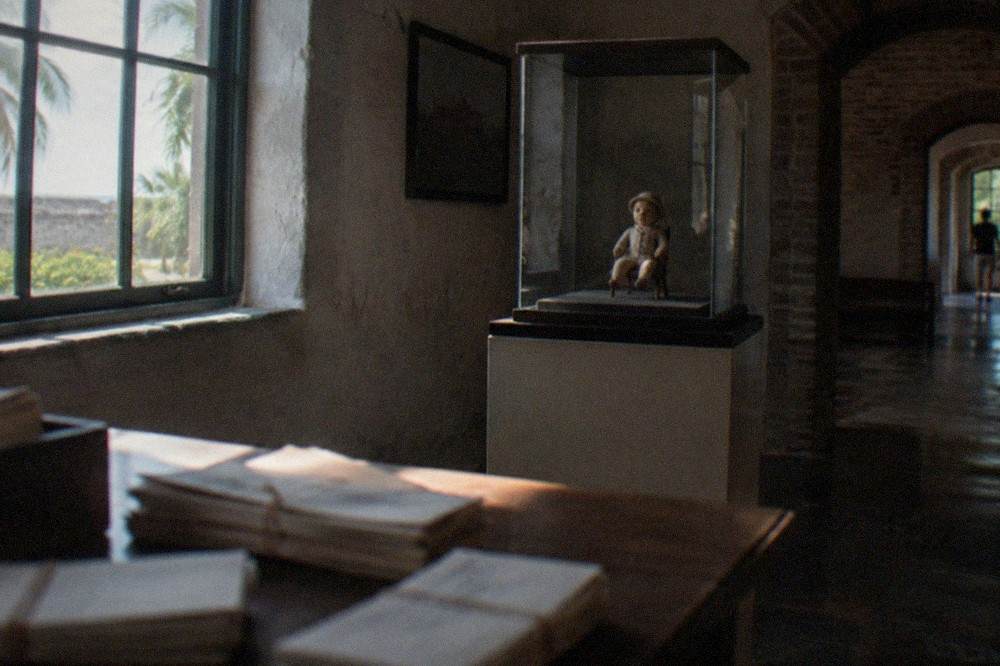
Robert's story is unusually well documented for a haunted object: a one-of-a-kind doll handmade by the German Steiff company around 1904, given to a Key West boy named Robert Eugene Otto, and donated in 1994 to the Key West Art & Historical Society, which has displayed him at Fort East Martello ever since. His ownership chain, his maker, and his arrival date are all verifiable museum-recorded history rather than investigator narrative.
The verified biography runs like this. The doll stands roughly 40 inches tall, is stuffed with wood wool, and wears a sailor suit that reportedly belonged to the boy himself. The doll took the name Robert; the boy went by Gene. Gene Otto grew up to become a prominent local artist and lived in the 1890s-vintage Artist House on Eaton Street, which still stands and appears on Key West ghost tour routes as a story stop. After Gene's death in 1974, the doll stayed with a later owner of the house, Myrtle Reuter, until her 1994 donation to the museum.
Then the folklore begins, and it deserves the label. The museum's own story pages recount that Gene's parents reportedly heard him talking to the doll and hearing a different voice answer, and described seeing the doll's expression change (see Seeing Robert). Neighborhood children later reported hearing footsteps and giggling from the Artist House attic, where Anne Otto had reportedly moved the doll, and spoke of a figure watching from the attic window. Reuter herself said the doll had "moved on his own." All of this is presented by the museum as legend and family account, and it is honestly framed that way here.
The best-known modern claim is the museum's own framing too: visitors who photograph Robert without permission and then experience misfortune send apology letters, which arrive on a near-daily basis. The doll's display case at Fort East Martello is surrounded by them. Whether the misfortunes are caused by the doll is not a question anyone can answer with evidence, and the museum does not claim to have answered it either. The letters are real. The mechanism is belief.
How Do The Two Dolls Compare Side By Side?
On documented facts, Robert wins on every measurable axis: older origin, traceable ownership, museum-recorded history, and continuous public display for three decades. On pop-culture reach, Annabelle wins decisively, with a film franchise that has made her the most famous haunted doll on earth. On claimed body count of misfortunes, both museums report blame from visitors, and neither claim is independently verified.
Here is the comparison laid out plainly, with the source of each fact noted so nothing quietly changes tier mid-table:
| Point of comparison | Robert the Doll | Annabelle |
|---|---|---|
| Physical object | One-of-a-kind Steiff doll, about 40 inches, circa 1904, documented maker | Mass-produced Raggedy Ann doll, circa 1970 |
| Origin story source | Museum-recorded biography, ownership chain traceable to the Otto family and a 1994 donation | The owners' and investigators' own account of reported doll movement |
| Where displayed | Fort East Martello Museum, Key West, since 1994, permanent public exhibit | The Warrens' Occult Museum in Monroe, Connecticut, in a locked case, with public access uncertain in recent years |
| Paranormal claims | Museum-framed lore: attic footsteps, giggling, expression changes, bad luck after unauthorized photos, daily apology letters | Investigators' account: a spirit reportedly manipulating the doll; film franchise added a demon |
| Pop-culture footprint | Featured in haunted-doll discussions, books and documentaries; widely cited among "most haunted doll" lists | Multiple major horror films and an extensive franchise built around the film version |
| Can you visit today | Yes, during regular museum hours, or after dark on a booked ghost hunt | Uncertain; the museum's status and visiting arrangements have shifted in recent years |
One more axis deserves its own paragraph rather than a table cell: age of the legend. Annabelle's story is barely fifty years old, and most of her cultural weight arrived with the film franchise and dates from it onward, which is younger than many of the people asking this question. Robert's folklore reaches back through the Otto household, the Artist House neighborhood, and a museum donation that itself is now over three decades old. An old story accretes layers, witnesses, letters and secondhand accounts; a new one has marketing. That asymmetry does not prove anything about spirits, but it does explain why Robert feels, to many visitors, like the doll with the longer shadow.

Can You Meet Either Doll In Person?
Robert, yes: he is on permanent public display at the Fort East Martello Museum during regular hours, and several bookable after-dark experiences built around him exist in Key West. Annabelle, effectively no: her museum's visiting status has been intermittent, and there is no equivalent bookable public encounter. For anyone wanting to stand in front of a famous haunted doll, Key West is the practical destination.
The daytime option is simple. Fort East Martello sits at 3501 South Roosevelt Blvd, a short drive or ride from Old Town, and standard admission covers the permanent exhibits including Robert's case. The museum's own pages carry current hours and pricing, and the fort's Civil War history, folk art and Gulf-facing battlements make the visit more than a single exhibit.
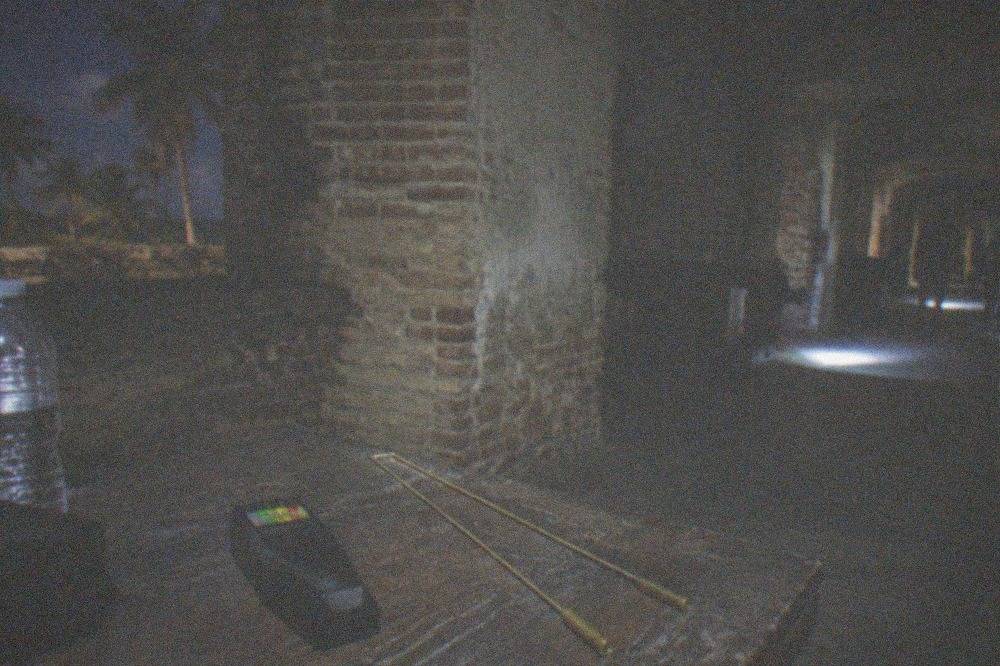
The after-dark option is where Key West genuinely has no parallel anywhere else. Sloan's Key West Ghost Tours runs the Fort East Martello Ghost Hunt, a 2-hour after-dark experience that includes a guided tour of the fort, a seated encounter with Robert the Doll, and then an independent paranormal investigation with ghost-hunting equipment, from $99, rated 4.7 from 173 reviews. The same operator runs the Haunted Firehouse Investigation inside the historic 1907 firehouse, from $95, capped at 13 people per night, rated a perfect 5.0 from 11 reviews. And for a budget-format ghost hunt with dowsing rods, EMF meters and a spirit board across several haunted locations, the Equipment Ghost Hunt from Key West Ghost Hunt runs 1.5 hours from $45, rated 4.6 from 112 reviews.
No Connecticut equivalent exists. There is no bookable "meet Annabelle" experience, no seated encounter, no after-dark investigation at her location. The asymmetry is worth stating plainly because it shapes the honest answer to this article's question: one doll is a place you can go and an evening you can book, the other is a locked case whose story you mostly consume through films and podcasts.
Which Doll Has The Stronger Claim To "Evil"?
Strictly speaking, neither doll has a verified claim to anything supernatural, so "evil" is the wrong word for both. But if evil means a pattern of harm visitors genuinely attribute to the object, Robert has the larger and longer-running paper trail of firsthand blame, in the form of apology letters arriving daily for decades. Annabelle's harm claims are secondhand and inseparable from her investigators' account.
The letters deserve emphasis because they are the most unusual artifact in either doll's story. People do not merely claim bad luck after photographing Robert; a substantial number of them write to the museum to apologize, addressing the doll by name, and the museum displays the accumulation. That is documented behavior by living visitors, whatever one concludes about its cause. It shows a legend strong enough to generate its own ongoing evidence, which Annabelle's case file, closed decades ago, cannot match.
On the other side of the ledger, Annabelle's pop-culture "evil" is explicitly manufactured. The film demon, the cult backstory, the murderous set-piece version of the doll: all of it is screenwriting. People who fear Annabelle are mostly fearing a fictional character that happens to share a name and a face with a doll in a case. Robert's scary version, by contrast, is the version the museum itself tells, layered with neighborhood lore that predates the internet. His legend was not built by a studio.
There is also a difference in tone. Annabelle's mythology is about attack: the films promise a doll that wants to hurt you. Robert's mythology is about violation of etiquette: the stories turn on disrespect, unauthorized photographs, mockery, and the apology that follows. Whether either pattern is real, the two folklores encode different ideas about what a haunted object wants. One wants fear. The other, if the letters mean anything, wants manners.
So Which Doll Should You Actually Worry About?
Neither one, in any way that requires worrying. No documented harm has been traced to either doll by any source this site would treat as evidence, and both museums frame their claims as belief rather than demonstrated fact. The productive question is which doll rewards your curiosity, and by that measure Robert wins for anyone who can reach Key West, because the encounter is bookable, the history is real, and the folklore is honestly labeled.
For the curious traveler, the comparison resolves into a practical choice. If you want the pop-culture icon and the film franchise, Annabelle delivers that, from your couch. If you want to stand in front of the actual object, read the actual letters, and learn the actual documented history of a Steiff doll that outlived its owner, his neighborhood and his city's memory, Robert is the only one of the two that offers it. The Robert the Doll visitor guide covers the museum visit in practical detail, and the real story behind Robert the Doll is worth reading before any visit, because knowing which parts are history and which parts are lore changes what you experience in the room.
For a first haunted-doll encounter, the seated Robert experience inside the fort is the most direct option, and the Fort East Martello Ghost Hunt's blend of guided history, the encounter and an equipment-based investigation afterward makes it the fullest version of the evening. If the doll himself is less the draw than the equipment-format hunt, the Haunted Firehouse Investigation offers the same operator's paranormal-investigation style in an equally storied building, in a group capped at 13. A site that publishes honest comparisons, like Key West Ghost Tours, can only point you to the experiences that exist; which legend you find scarier is yours to decide after you have met the doll.
Common Questions About Evil Dolls
Who Is More Evil, Annabelle Or Robert The Doll?
Neither doll's supposed malevolence is independently verified, so neither can honestly be called the more evil one. Robert has the longer, better-documented history and the larger firsthand paper trail in the form of daily apology letters. Annabelle has the bigger pop-culture footprint, built largely on a film franchise that invented her demon. On evidence, it is a tie at zero; on storytelling, it depends which story frightens you more.
Is Robert the Doll more dangerous than Annabelle?
No source treats either doll's danger as demonstrated fact. The Key West museum frames Robert's bad-luck reputation as visitor belief, not proven phenomena, and Annabelle's case rests entirely on her investigators' account plus fictional films. Neither museum claims a verified injury caused by the doll.
Can you visit Robert the Doll in Key West?
Yes. Robert has been on permanent display at the Fort East Martello Museum since 1994, viewable during regular museum hours with standard admission, and featured in bookable after-dark ghost hunt experiences at the fort.
Is Annabelle a real doll?
The object is real: a Raggedy Ann doll held by the paranormal investigators' museum in Connecticut. The demonic version from the films is fictional, and even the original case account, as reported, described a spirit rather than a demon.
Why can't you take pictures of Robert the Doll?
Photography is not forbidden; the museum's own framing holds that photographing Robert without asking his permission first is what visitors blame for their subsequent bad luck, which is why apology letters arrive daily. The rule is etiquette within a legend, not a museum ban, though respectful visitors commonly ask first.
Which haunted doll is worth a trip?
Robert, for most travelers, because he is publicly displayed in a museum you can visit daily and bookable after-dark encounters exist around him. Annabelle's museum access has been uncertain, and no equivalent public encounter is available.